
Roy Keane: Manchester United’s ‘swagger’ is returning, but Carrick not the long-term answer
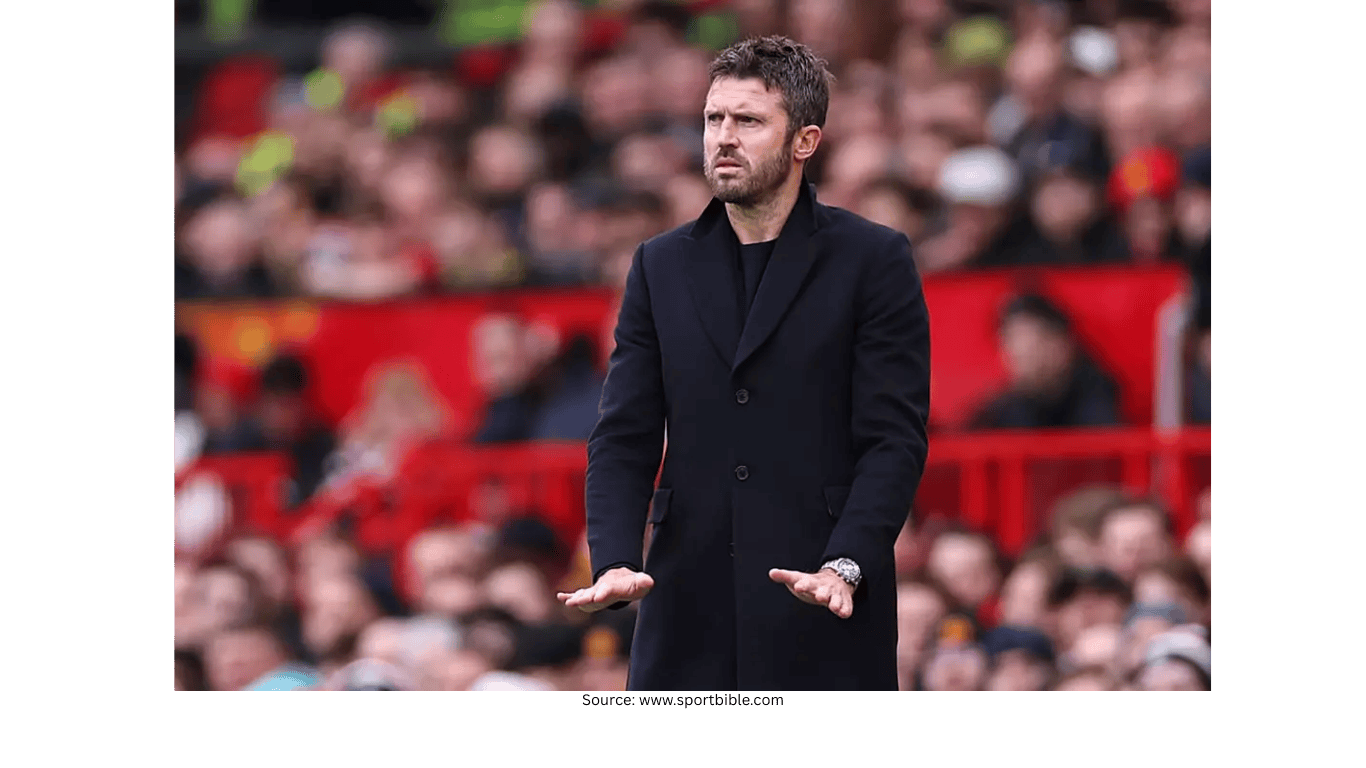
United’s mood shift after two statement wins
Manchester United’s recent victories over Manchester City and Arsenal have sparked a familiar conversation around Old Trafford: is the club beginning to look like itself again, and what should happen next in the dugout?
For Roy Keane, the answer is split into two parts. He sees clear signs of improvement in the team’s performances — a return of confidence, control and a sense of identity — but he does not believe those early positives should change the bigger decision United face about who should lead them in the long term.
Keane’s verdict came after United’s dramatic 3-2 win away at Arsenal, a result sealed by Matheus Cunha’s late winner at the Emirates Stadium. It was a second victory in as many games for Michael Carrick since he was confirmed as head coach until the end of the season.
Those back-to-back wins have naturally raised the volume of the debate. Carrick has delivered immediate results and, according to Keane, has helped the side rediscover some of the qualities supporters associate with the club’s best periods. Yet Keane’s central argument is that short-term form should not be confused with long-term suitability for a job of this scale.
Keane: ‘Swagger’ is back — but that does not settle the manager question
Keane said United have their “swagger” back after the Arsenal match, pointing to the calmness and confidence he felt in their play. In his view, the game carried echoes of the past, not only in the football itself but also in the reaction of the supporters.
He highlighted how the team approached the contest considering “where they are and where they have been,” suggesting the performance represented a meaningful step forward from recent standards. Keane also noted the impact of substitutes, describing how players coming off the bench influenced the outcome — a sign, to him, of a group pulling in the same direction.
There were also moments of quality that stood out. Keane referenced “two brilliant strikes” in the match, while the late Cunha winner provided the decisive moment in a game that swung back and forth. For United, it was not simply a win; it was a win against the league leaders, and it came with the kind of drama that can shape belief inside a squad.
Still, Keane drew a firm line between praising what he saw on the pitch and endorsing Carrick as the future head coach. His argument is blunt: two wins, even two impressive ones, are not enough to change the scale of the decision.
‘Anyone can win two games’: why Keane remains unconvinced
Keane’s scepticism is rooted in what he believes the job demands over multiple seasons. Speaking after the Arsenal match, he said: “Two great performances but anyone can win two games.”
He went further, arguing that even an exceptional run to the end of the season would not automatically persuade him. In his words, “If United win every game until the end of the season, I still wouldn’t be giving him the job.”
The reasoning behind that stance is not framed as a criticism of Carrick’s first steps, but as a reflection of the club’s size and the challenges ahead. Keane believes United need a head coach who is “bigger and better” than Carrick — someone who can be trusted to navigate the pressures of the role and, crucially, someone who can deliver league titles.
Keane posed the key question directly: should anyone “sit here and believe Michael Carrick can get United winning league titles?” For him, the answer is no. “It’s not enough for me,” he said, adding that he does not believe Carrick is the man to take United back to the top of the league.
That distinction matters. Keane did not dismiss Carrick’s work in the short term; he acknowledged that the interim coach has “done really well” and called the two performances “brilliant.” But he separated immediate improvement from the bigger requirement: building a title-winning project.
What the Arsenal win represented for United
United’s 3-2 victory at the Emirates Stadium offered a useful snapshot of what Carrick’s early period has looked like: competitive, intense, and capable of producing decisive moments at a high level.
Matheus Cunha’s dramatic winner was the headline, but the wider performance was what drew commentary. Keane’s observations focused on the team’s composure and the sense of calmness he felt in their play. He also pointed to the supporters, describing the United fans in the corner as reminiscent of “the old days.”
In a season where United have been judged against their own history as much as their opponents, that kind of atmosphere and connection matters. It signals that the fan base can quickly respond when it recognises familiar traits: intensity, belief, and players stepping up in key moments.
Keane also emphasised the contribution from the bench. In top-level football, the ability to change a game through substitutions is often a reflection of both squad depth and collective mentality. His comments suggested that, at least in this match, United had the kind of impact from their replacements that can separate a good performance from a winning one.
Gary Neville: keep Carrick to the end of the season, then hand over
Keane was not alone in questioning whether Carrick should become United’s permanent appointment. Gary Neville also stated that he does not see Carrick as the long-term solution, even while expressing satisfaction with what he has watched over the last two weeks.
Neville’s view is that United should avoid making a decision driven by emotion. He said the club have “acted emotionally a number of times in the last 12 years,” a remark that framed his preference for a more measured approach.
At the same time, Neville spoke positively about the football United have produced under Carrick so far. He described a sense of familiarity in the performances, saying it “feels like I’m watching my team play again properly.” In his assessment, United have played with intensity and looked more like the team supporters expect to see.
Neville’s proposed solution is a compromise: Carrick should remain in charge until the end of the season, then “hand the baton over” to a more experienced coach. He mentioned Thomas Tuchel and Carlo Ancelotti as examples of the type of manager he believes United should target — “someone of that world-class ilk.”
That perspective aligns with Keane’s broader point. Both former players are willing to credit Carrick for stabilising the team and delivering results, but both place greater weight on what they see as the long-term demands of the job.
Carrick’s own message: early progress, but ‘we need to put more layers on top’
While the debate around his future grows louder, Carrick has struck a cautious tone in public. After securing his second win as head coach, he stressed how early the process still is.
“It’s only been 10 days,” Carrick said, adding that it was “never going to be perfect.” He also tempered expectations about what United could realistically do in such a short period, explaining that the team could not expect to arrive at a place like the Emirates and “suddenly dominate the whole game and the ball.”
Instead, Carrick framed the recent results as a starting point. “We’re just starting off, really,” he said. “It’s a great starting point, but we need to put more layers on top, and we’ll try to do that in the coming weeks.”
He also directed praise toward the staff and players, crediting them for how much they have “invested” and “bought into it.” In Carrick’s telling, coaching messages only matter if the squad commits to them fully, and he suggested the evidence of that commitment was visible in the way substitutes contributed.
“It’s alright trying to help them and say certain things, but they’ve got to live it,” he said, pointing again to the impact from the bench. Carrick described the atmosphere as “a real collective feeling” and underlined the importance of celebrating with the fans at full time, calling it “a big moment.”
The bigger question United must answer
The immediate facts are simple: Carrick has started with two wins, and they have come against Manchester City and Arsenal. Those results have improved the mood, lifted confidence, and created a sense that United are reconnecting with an identity supporters recognise.
But the managerial question is not only about a short burst of form. Keane’s comments reflect a belief that the club’s next decision must be made with the next few years in mind, not just the next few weeks. In his view, the role requires a figure who can handle the scale of the club and deliver the biggest prizes.
Neville’s remarks echo the same caution, warning against emotional decision-making and urging United to think in terms of proven, experienced leadership at the highest level.
Carrick, for his part, has not fuelled speculation. Instead, he has described the work as a process that is only beginning, with more development required. His focus has been on collective buy-in, incremental progress, and building on the early foundation.
For now, United’s next challenge is to sustain the intensity and clarity that have been evident in these two matches. The debate about who should lead the club beyond the end of the season will continue, but the early period under Carrick has at least given supporters and former players something they have been asking to see: performances that feel like Manchester United again.
Key points from the debate
- Roy Keane believes Manchester United have their “swagger” back after wins over Manchester City and Arsenal.
- Keane praised the calmness in United’s play, the quality of key moments, and the influence of substitutes.
- Despite that, Keane said United need a manager “bigger and better” than Michael Carrick for the long term.
- Keane argued that even a perfect run to the end of the season would not convince him Carrick should get the job permanently.
- Gary Neville also said Carrick is not the long-term solution and suggested United should target a more experienced, world-class coach.
- Carrick has emphasised the short timeframe, describing the recent results as a starting point and saying the team needs to “put more layers on top.”