
PSG edge Bayern Munich 5-4 in nine-goal Champions League semi-final first leg
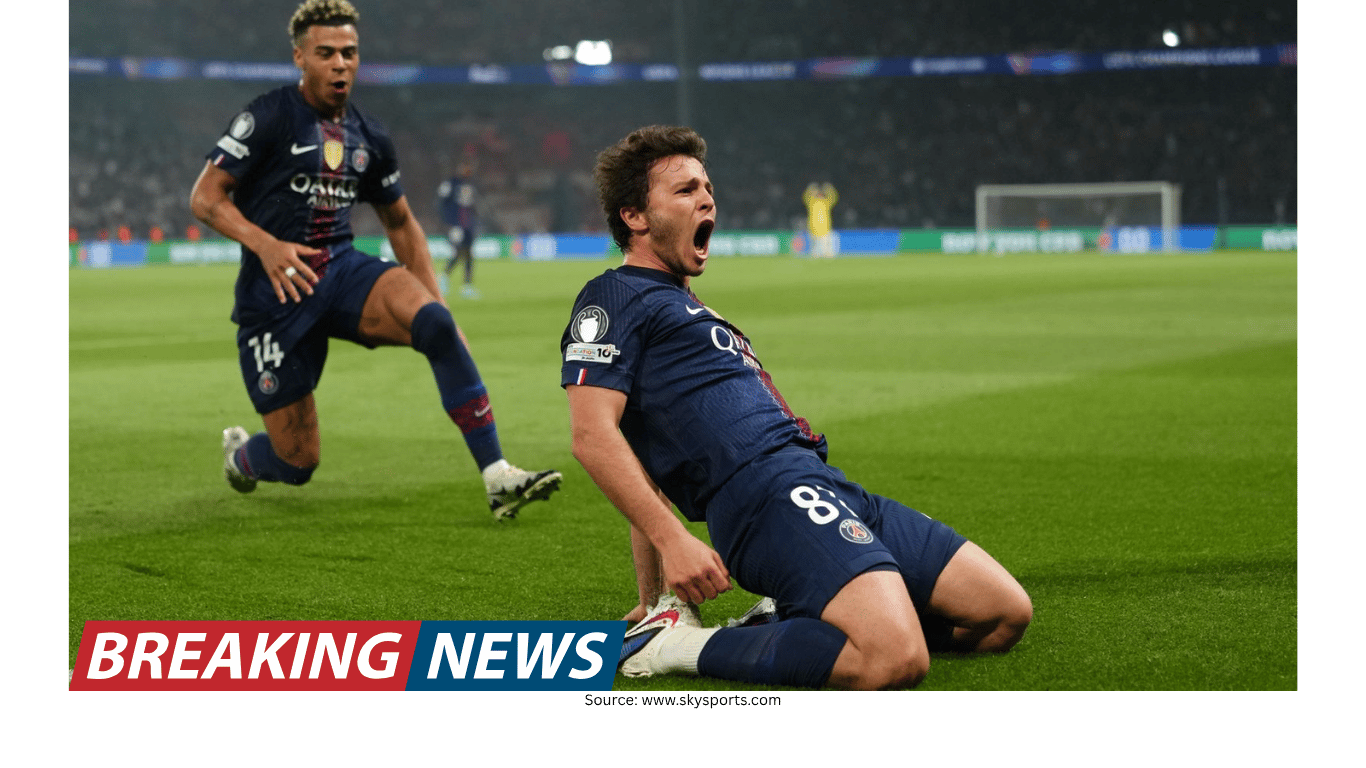
A semi-final for the ages in Paris
Paris Saint-Germain and Bayern Munich delivered a Champions League semi-final first leg that will be remembered for its sheer volume of goals and relentless momentum swings. The holders, PSG, emerged with a 5-4 win in Paris after a match that never settled into a predictable rhythm and repeatedly punished even brief lapses in concentration.
The nine-goal spectacle carried historical weight as well as entertainment value. It was the first time in a European semi-final that both teams scored four or more goals. It also matched the joint-highest scoring semi-final in European Cup history, alongside Rangers’ 6-3 defeat to Eintracht Frankfurt in 1960.
For all the drama, the result leaves the tie open. PSG take a narrow advantage into next Wednesday’s second leg in Germany, while Bayern can point to their late surge as evidence that the contest remains on a knife-edge.
How the scoring unfolded
The match began with the kind of intensity expected when two attack-minded teams meet at this stage of the competition, and it quickly became a contest shaped by decisive moments in both penalty areas.
- 17th minute: Harry Kane opened the scoring from the penalty spot, registering his 59th goal for club and country this season.
- PSG response: Khvicha Kvaratskhelia levelled with a superb finish soon after, setting the tone for a night in which neither side could hold an advantage for long.
- 33rd minute: Joao Neves headed PSG into the lead.
- 41st minute: Michael Olise struck an equaliser for Bayern with a powerful finish.
- Stoppage time (first half): Ousmane Dembele converted a penalty to restore PSG’s lead and make it 3-2 at half-time.
That first half alone contained five goals and multiple shifts in control. PSG’s half-time advantage came via a contentious penalty decision, awarded for an Alphonso Davies handball after a VAR review at the pitchside monitor. The incident drew attention because Dembele’s cross appeared to strike Davies’ leg before making contact with his arm, yet the penalty was still given and PSG capitalised.
PSG surge after the break — then Bayern’s rapid reply
PSG appeared to seize command early in the second half. In a devastating spell, they stretched the scoreline from 3-2 to 5-2, with Kvaratskhelia and Dembele both scoring again in quick succession.
- Early second half: Kvaratskhelia swept home to extend PSG’s lead.
- 58th minute: Dembele scored a fine goal in off the post to make it 5-2, completing a burst in which Kvaratskhelia and Dembele scored within 143 seconds.
At 5-2, PSG looked in complete control. Yet the match’s defining feature was its refusal to stay stable. Bayern responded with two goals in three minutes, cutting the deficit to a single goal and transforming the second leg into a genuine opportunity rather than a rescue mission.
- 65th minute: Dayot Upamecano headed in to begin Bayern’s comeback.
- 68th minute: Luis Diaz controlled a lobbed pass from Kane and fired past PSG goalkeeper Matvey Safonov.
Diaz’s goal carried its own twist, initially ruled out for offside before a VAR check overturned the decision. The reversal ensured Bayern left Paris with real hope of reaching a first Champions League final in six years.
Key performers: Dembele and Kvaratskhelia lead PSG’s attack
In a match where both teams scored freely, PSG’s edge came from the combined impact of Ousmane Dembele and Khvicha Kvaratskhelia. Both players scored twice, and Dembele was named man of the match. Their ability to turn moments into goals proved decisive, particularly during the early second-half surge that built PSG’s three-goal cushion.
Joao Neves also contributed with an important headed goal, while PSG’s overall attacking approach remained consistent even as the game became increasingly chaotic.
For Bayern, Harry Kane’s influence extended beyond his penalty opener. He also provided the lobbed pass that Diaz brought down so expertly before scoring. Michael Olise’s first-half equaliser kept Bayern in the contest at a crucial moment, and Upamecano’s header sparked the late rally.
A night of debate: brilliant attacking or poor defending?
Nine goals in a semi-final inevitably provoked discussion about whether the match was defined more by elite finishing or defensive shortcomings. Kane, speaking after the final whistle, offered a view that the defending deserved credit despite the scoreline.
He described the defending as “amazing”, arguing that the quality of attackers can overwhelm even top-level defenders and highlighting the difficulty of the job when players are pulled into unfamiliar spaces and match-ups across the pitch.
That assessment was not universally shared. Wayne Rooney strongly disagreed, suggesting Kane’s comments were influenced by loyalty to team-mates and a desire to build confidence for the return leg. Rooney’s view was blunt: the defending from both teams was “really bad”.
Jamie Carragher offered a more nuanced interpretation, focusing on the level of attacking performance rather than pinning the scoreline solely on defensive errors. He argued that the attacking players were consistently winning their individual battles and that the goals felt like “great goals” rather than a sequence of obvious blunders. Carragher also framed the match as a welcome example of teams taking risks, noting that while defensive purists may have been frustrated, the contest was anything but boring.
Neuer’s difficult night and an unusual statistic
Among the more striking details from the match was the performance of Bayern goalkeeper Manuel Neuer, who failed to make a save across the nine-goal contest. In a tie decided by fine margins, that statistic stood out, even amid the broader narrative of attacking brilliance and end-to-end play.
What PSG said: no change of philosophy
Dembele’s post-match comments suggested PSG will not approach the second leg with caution simply because they hold a one-goal lead. He described the first leg as a meeting of two great teams that attack without hesitation, and while he acknowledged PSG eased off at 5-2, he made clear the plan is not to retreat into a defensive shell.
“We’re happy with the result, even though at 5-2 we stopped playing a bit towards the end,” Dembele said. “We’re not going to change our philosophy. We’re going to attack, and they’re going to attack too. So I think it’s going to be a great second match.”
Second leg stakes: history still in play
The first leg set up a second match that could be as dramatic as the opener. With PSG leading 5-4, Bayern know a one-goal swing would be enough to flip the tie, while PSG will be aware that their advantage is fragile given how quickly Bayern closed the gap in Paris.
There is also a statistical milestone on the horizon. If five goals are scored at the Allianz Arena in the second leg, the semi-final would become the highest-scoring Champions League knockout tie in history. Dembele, already anticipating another open encounter, appeared to embrace the prospect of a similarly expansive game in Munich.
Match summary
- PSG beat Bayern Munich 5-4 in the Champions League semi-final first leg in Paris.
- Dembele and Kvaratskhelia scored twice each; Joao Neves also scored for PSG.
- Kane scored a penalty and assisted Diaz; Olise and Upamecano also scored for Bayern.
- The match was the first European semi-final in which both teams scored four or more goals.
- The tie remains open ahead of next Wednesday’s second leg in Germany.
Looking ahead
PSG will travel to Germany with a lead but also with a reminder of how quickly a commanding position can erode against an opponent with Bayern’s attacking resources. Bayern, meanwhile, can take confidence from turning 5-2 into 5-4 in a matter of minutes, even if the defensive questions raised by the first leg remain unresolved.
With both sides committed to attacking football and with the first leg offering little evidence that either team will prioritise control over chance creation, the return match is set up to be another high-stakes contest where momentum may matter as much as tactics.