
Leicester City 2-2 Hull City: Draw confirms Foxes’ relegation to League One
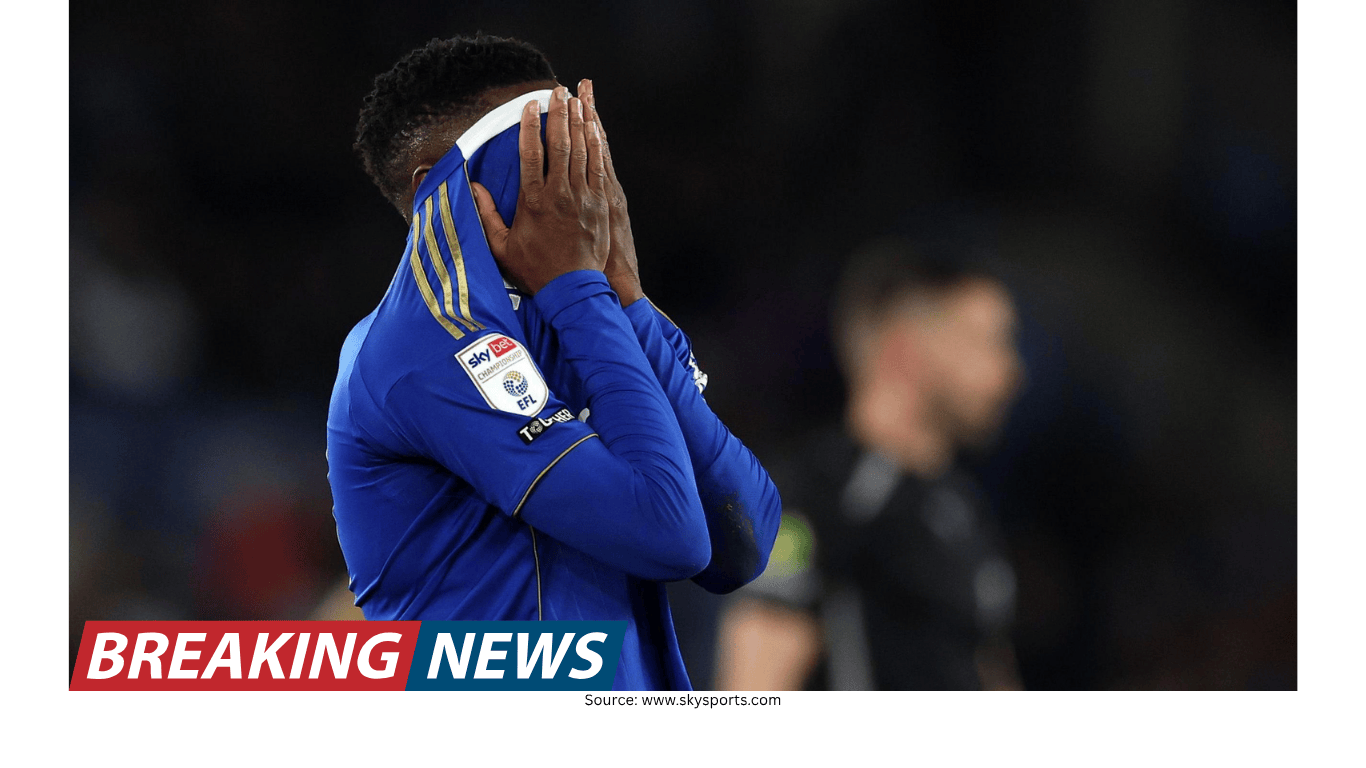
A draw that settled Leicester’s fate
Leicester City have been relegated from the Championship after drawing 2-2 with Hull City at the King Power Stadium. The result confirmed the Foxes will play in League One in 2026/27, a stark moment for a club that lifted the Premier League title just shy of a decade ago.
The backdrop to the match was unforgiving. Leicester began the night 23rd in the table and eight points from safety, having managed only two wins in their previous 19 league games. The equation was simple: anything less than victory would leave them with no route to survival. They did rally, and they did lead, but the final whistle brought the season’s long drift into danger to a definitive conclusion.
From title winners to the third tier
Relegation to League One lands with particular force because of what Leicester have been in the recent past. Under Claudio Ranieri, they defied 5,000/1 odds to win the Premier League, a story that remains one of English football’s most extraordinary achievements. This latest drop means that, in 2026/27, the club will be competing in the third tier for only the second time across a 142-year history.
The contrast between those heights and the current reality has shaped much of the reaction. Pundits and former players looking at the squad’s experience and perceived quality have struggled to reconcile it with the outcome. Yet the table, and the run of results that preceded this match, ultimately provided the clearest explanation: Leicester simply did not collect enough points over the season.
How the match unfolded at the King Power Stadium
The game itself captured many of the themes that have defined Leicester’s campaign: costly errors, brief surges of momentum, and an inability to protect advantages at key moments.
- 17th minute: Hull took the lead after Leicester gifted them an opening. Goalkeeper Asmir Begovic, attempting to play out from the back, passed straight to Millar, who composed himself and finished.
- 52nd minute: Leicester levelled from the penalty spot. Issahaku Fatawu was tripped by Lewis Koumas, and James converted emphatically from 12 yards.
- Shortly after: Leicester turned the game around in rapid fashion. From the next attack, Thomas met Bobby De Cordova-Reid’s cross to make it 2-1, flipping the atmosphere inside the stadium and briefly reigniting hopes of survival.
- 64th minute: Hull equalised. Millar again caused problems down the left and set up Oli McBurnie, who struck from 16 yards to make it 2-2.
Leicester’s second-half response was immediate and forceful, and for a short spell the match felt as though it might become a late-season escape act. But Hull’s equaliser arrived only nine minutes after Leicester had taken the lead, and with it came the sense that Leicester’s margin for error—already minimal—had finally disappeared.
Flashpoints and fine margins
The penalty that brought Leicester level was a decisive moment in the match, and it also triggered a major reaction from Hull’s bench. Hull manager Sergej Jakirovic was sent to the stands for protesting the award. Even so, Hull recovered quickly, and Leicester were unable to turn the emotional swing of the second half into the win they needed.
For Leicester, the opening goal conceded was particularly painful because it came from a self-inflicted mistake. The first half, in general, left them with too much to do. While they created moments where they could have scored, they did not match the urgency the situation demanded, and the match became a chase rather than a platform.
Rowett: “You don’t get relegated over three or four games”
Leicester manager Gary Rowett described the night as “incredibly frustrating,” pointing to a familiar pattern: a poor error in the first half, followed by a much stronger spell after the break. In his view, the second-half performance showed what Leicester were capable of, but it also underlined what had been missing in the run-in.
Rowett argued that the team’s problems were not confined to one area of the pitch. He noted Leicester had kept only five clean sheets all season, framing relegation as a collective failure rather than something that could be pinned solely on missed chances in attack. The goals conceded against Hull—one from a mistake and one from open play after being pulled out of shape—served as a final example of the defensive frailties he highlighted.
His wider point was blunt: relegation is the product of a season’s work, not a handful of decisive moments. Leicester’s late rally against Hull was not enough to erase the damage done across months of underperformance.
Chairman’s message: responsibility and rebuilding
Following relegation, Leicester owner Aiyawatt Shrivaddhanaprabha issued a statement to supporters accepting responsibility for the club’s drop. He said there were “no excuses,” describing the journey from “the highest highs” to “the lowest lows,” and apologised for the disappointment caused.
He also sought to set a direction for what comes next, saying the club would take “the necessary decisions” to rebuild, improve, and restore standards. The message stressed unity and perseverance, with a clear objective to respond strongly and move the club forward again.
Reaction: disbelief, criticism, and concern
The immediate reaction to Leicester’s relegation mixed shock with anger and anxiety about what the drop could mean. One assessment focused on the perceived mismatch between the squad’s profile and the outcome, describing the fall into League One as unprecedented for a team that had been tipped to win the Championship title.
Another reaction was more emotional and wide-ranging, expressing sympathy for supporters and club staff, and raising concerns about the wider consequences beyond the first team. The discussion touched on questions about the club’s training base at Seagrave and the implications of a sharp financial hit, framing relegation as something that could ripple through many parts of the organisation.
What united the commentary was the sense that this was not a routine relegation. Leicester were promoted two years ago with a similar group of players, and yet have now suffered a second consecutive demotion. The contrast has made the outcome harder for many observers to process.
The financial impact of dropping into League One
Beyond the sporting blow, Leicester face a significant reduction in income next season. Revenues are predicted to fall by around 50 per cent compared with the Championship, and would be less than a third of what the club were earning in the Premier League at the same point last year.
The figures outlined paint a steep decline:
- Annual revenues of £187m in the top division.
- Likely to be just over £100m by the end of this Championship season.
- Predicted to fall to around £60m per year in League One.
Even with that drop, Leicester would still be the division’s biggest earners by a wide margin. Average League One revenues are described as around £10m, roughly one-sixth of Leicester’s predicted figure. That gap underlines both the scale of Leicester’s decline and the unusual financial profile they will take into the third tier.
Parachute payments: a cushion that shrinks over time
Leicester’s rapid fall does come with some financial cushioning through parachute payments, designed to ease the adjustment after relegation from the top flight in 2025. Crucially, that entitlement would not change even if the club suffers a second consecutive demotion.
However, the same mechanism also guarantees a gradual reduction. Payments decrease over time, and Leicester’s next-season support is expected to be around £10m lower than the previous year. The structure described is:
- Year one: roughly 55 per cent of Premier League entitlement
- Year two: roughly 45 per cent
- Year three: roughly 20 per cent
That decline matters even if Leicester were to return to the Championship quickly. The reduction would continue into 2027/28, meaning the financial landscape will remain challenging even in a best-case sporting scenario.
Squad costs and the likelihood of major changes
One of the most immediate pressures will be the wage bill. It is expected Leicester’s wages would need to fall by around 30-40 per cent. Some of that reduction may occur automatically through relegation clauses in contracts, but the broader expectation is a major churn in the squad.
The logic is straightforward: many players may become unaffordable for a League One club, or may be considered too high-calibre to be content playing in the third tier. The challenge will not only be financial; it will also be about building a group that is fully committed to the demands of the division.
Fatawu and the changing transfer picture
Issahaku Fatawu is cited as the most obvious example of how relegation can shift a club’s transfer leverage. Leicester could have sold him for around £35m when they were relegated from the Premier League last summer, with a number of top-tier clubs prepared to pay that fee.
Now, with Leicester in League One, his market value is expected to be lower—potentially £10m-15m less for any potential buyer—although Leicester would be expected to seek the best price available. The broader implication is that relegation can compress the value of assets, making rebuilds harder to finance on favourable terms.
What relegation means on and off the pitch
Leicester’s situation is unusual: a club with recent major honours, significant infrastructure, and historically high revenues now preparing for a season in the third tier. The club’s training ground has been referenced as a major ongoing cost, and the salary commitments of a squad built for higher levels will need to be addressed quickly.
At the same time, the match against Hull showed that Leicester can still produce strong spells, as they did immediately after half-time. The difficulty is that those spells have not been sustained often enough across the season, and the defensive record—only five clean sheets—suggests structural issues that cannot be solved by intensity alone.
The chairman’s statement points toward a period of decision-making and rebuilding. The scale of the task is clear: Leicester must reshape a club built for the Premier League and Championship into one capable of succeeding in League One, while managing reduced income and the realities of parachute payments that diminish year by year.
A night that reflected a season
The final scoreline—Leicester City 2-2 Hull City—will be remembered not for the quality of the contest, but for what it confirmed. Leicester needed a win and could not find it. They made a costly mistake, they fought back, they briefly led, and they conceded again. In that sequence sits a summary of a campaign in which too many errors, too few clean sheets, and too little consistency left them with no safety net.
For supporters, the pain is sharpened by the club’s recent history: the improbable Premier League title, the FA Cup win five years ago, and the expectation that Leicester would be competing at a higher level than this. Now, the focus turns to how the club responds—sporting, financial, and organisationally—as it prepares for a season in League One.