
Brunson ignites historic late rally as Knicks stun Cavaliers in overtime of East finals opener
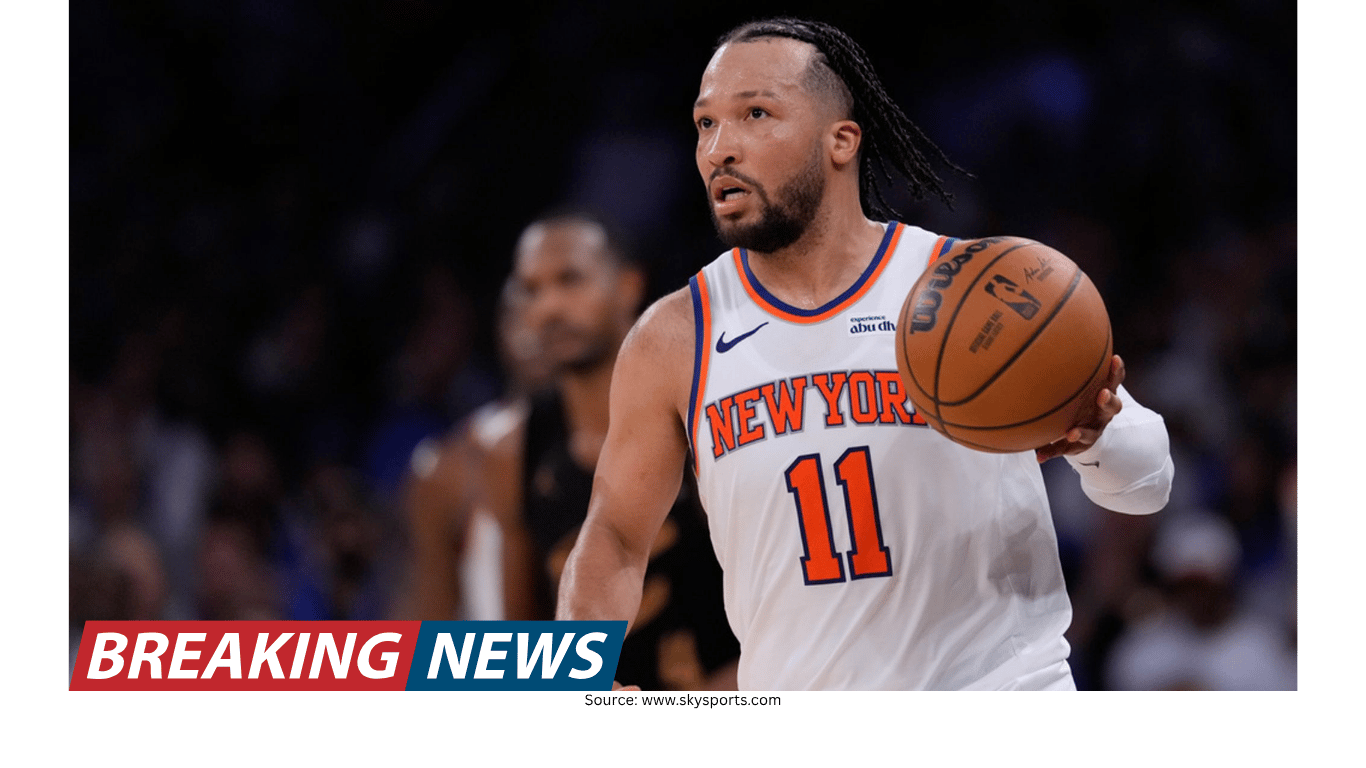
A comeback that reshaped Game 1
The Eastern Conference finals opened with a result that felt unlikely for most of the night, then suddenly inevitable once momentum swung. Jalen Brunson powered the New York Knicks to a dramatic overtime victory over the Cleveland Cavaliers, authoring one of the NBA’s most striking postseason rallies: New York came back from 22 points down in the fourth quarter, forced extra time, and then took control immediately in overtime.
The Knicks’ comeback was not a slow, gradual climb. It was a surge built on repeated pressure at the rim, rapid defensive stops, and a crowd at Madison Square Garden that grew louder with each possession. With under eight minutes left in regulation, New York trailed 93-71. From that point, the game turned into a test of composure, decision-making, and stamina—one New York passed as Cleveland struggled to steady itself.
The turning point: down 22 with time running out
Late deficits in playoff basketball often lead to a predictable finish—teams shorten rotations, protect the ball, and grind out possessions. Cleveland appeared positioned to do exactly that, holding a 22-point advantage in the fourth quarter. But the Knicks refused to treat the margin as final, and Brunson, in particular, played as if every trip could be the start of a run.
Brunson sparked the rally with a series of drives to the basket, repeatedly putting pressure on Cleveland’s defense and forcing the Cavaliers to react. The Knicks’ offense became more direct and urgent, while their defense tightened enough to allow the comeback to gather speed. The game’s tone changed from Cleveland controlling the pace to New York dictating the terms of each possession.
After trailing 93-71 with under eight minutes remaining, New York closed regulation on an 18-1 run—an extraordinary stretch in a postseason setting where every possession is magnified. The Cavaliers, who had played strong basketball for three quarters, were suddenly trying to hold off a team playing with growing confidence and a building home-court roar.
Brunson’s late shot sends it to overtime
The comeback reached its defining moment in the final seconds of regulation. With the Knicks still chasing, Brunson tied the game at 101-101 with 19 seconds left, completing a rally that had looked improbable just minutes earlier. The sequence encapsulated the Knicks’ approach during the run: keep attacking, keep generating pressure, and trust that repeated efforts would eventually break through.
Brunson later described the mindset in simple terms. “Just keep fighting,” he said. “Keep chipping away. We’re not going to get it back in one possession.” That perspective matched what the Knicks displayed on the floor. Rather than hunting a single miracle play, New York treated the deficit as a series of small problems to solve—one stop, one drive, one basket at a time.
For Cleveland, the final minutes of regulation became a struggle to regain rhythm. A lead that had felt secure began to feel fragile, and the Knicks’ confidence rose as the Cavaliers’ margin disappeared. By the time the game reached overtime, the emotional balance had shifted sharply toward New York.
Overtime: New York strikes first and never lets go
In extra time, the Knicks did not wait to see whether the momentum from regulation would carry over. They opened overtime with a 9-0 run, immediately taking control of the game and leaving Cleveland to chase again. The early burst in overtime reflected the same themes that fueled the fourth-quarter comeback: aggressive offense, decisive execution, and a defensive edge that limited Cleveland’s ability to respond.
Madison Square Garden responded in kind. The crowd was described as delirious, dancing and screaming in the aisles as the Knicks surged ahead. In a playoff environment, that kind of atmosphere can amplify every successful possession, and New York’s overtime start gave the building a reason to erupt.
Once the Knicks established that overtime cushion, the Cavaliers faced a different kind of pressure—one created not by a large scoreboard deficit, but by the sense that the game had slipped away in a matter of minutes. New York’s ability to begin overtime with such force ensured that the comeback would not simply be a dramatic moment, but a complete turnaround that ended with a win.
Brunson’s 38 points set the tone
Brunson finished with 38 points, the central figure in a comeback that will be remembered for both its scale and its timing. The Knicks needed a catalyst to turn a 22-point fourth-quarter hole into a winnable game, and Brunson provided it through relentless attacking and late-game shot-making.
His performance also captured the strategic reality of playoff basketball: teams look for matchups they can exploit and players who can sustain pressure under fatigue. Brunson’s ability to repeatedly get into the paint and create scoring opportunities gave New York a reliable option when the game became chaotic.
While the comeback will be associated with Brunson’s scoring total, it was also about the way he shaped the Knicks’ decision-making. His approach—keep chipping away—became a blueprint for how New York played the final minutes. The Knicks did not need everything to happen at once; they needed consistent, aggressive possessions, and Brunson delivered them.
Support scoring: Bridges and a late lift from Anunoby
New York also received important contributions beyond its leading scorer. Mikal Bridges added 18 points, offering additional scoring support as the Knicks tried to climb back into the game. In a comeback of this magnitude, secondary scoring matters because it prevents the defense from focusing solely on one player.
Three Knicks scored 13 points, including OG Anunoby, whose night was particularly notable given the context. Anunoby returned after missing two games with a strained right hamstring and struggled for much of the contest before delivering a decisive late impact. He scored nine of his 13 points in overtime, helping New York turn extra time into a controlled finish rather than a coin-flip.
Anunoby described his approach plainly: “I was just going to play hard, be aggressive.” That aggression showed up when it mattered most, in the period when every possession can swing the outcome. His overtime scoring complemented Brunson’s leadership and helped ensure that the Knicks’ early 9-0 overtime run translated into a win.
Defensive flexibility and coaching perspectives
Beyond the points, Anunoby’s return also gave New York additional options defensively. Coach Mike Brown highlighted the value of that versatility, saying Anunoby “gave us a lot of versatility defensively and allowed us to do different things on that end of the floor.” In a playoff series, those options can be critical, especially when teams are adjusting from game to game and possession to possession.
Brown also addressed the tactical reality that both teams were looking to attack specific matchups. “There is no secret: We were attacking Harden,” Brown said. “Sometimes you’ve got to do what the game dictates, and they were trying to do the same thing with Jalen, so we said, ‘OK, we feel like we can play that game.’ We try not to play that game much, but we feel like we have a guy that we can play that game with in Jalen.”
The quote underlined a key postseason truth: playoff games often become a sequence of targeted decisions. Teams probe for advantages, then lean into them. In this opener, New York’s confidence in Brunson’s ability to handle that kind of attention helped shape how the Knicks approached the most important minutes.
Cleveland’s strong start, then a fourth-quarter collapse
For three quarters, Cleveland looked positioned to continue its strong road form. Donovan Mitchell led the Cavaliers with 29 points, and the team appeared on track for a third straight road win before the late collapse. Evan Mobley posted 15 points and 14 rebounds, contributing on both the scoring and rebounding fronts.
James Harden also scored 15 points, but his efficiency and ball security became part of the story. He went one for eight on three-pointers and finished with more turnovers (six) than field goals (five). In a game that ultimately hinged on a narrow set of late possessions, empty trips and turnovers carried added weight.
Still, the Cavaliers did not frame the loss as a one-player issue. Mitchell emphasized collective responsibility, saying the team could have done more to slow down Brunson and that the defeat should not be pinned on Harden. “Ultimately, this isn’t on him - it’s on all of us,” Mitchell said. “It’s not just on one person. He’s been around the league long enough. He understands that.”
Cleveland coach Kenny Atkinson echoed the split between the early control and the late unraveling. “We played great basketball tonight for three quarters. Unfortunately, the fourth quarter - they dominated us,” he said. The assessment captured the sharp contrast between Cleveland’s first 36 minutes and the final stretch when New York seized the game.
What the result means for New York’s run
The victory extended the Knicks’ winning streak to eight games and moved them within three wins of their first NBA Finals appearance since 1999. While one game does not decide a series, an opener like this can reshape belief and pressure on both sides. New York not only earned a crucial win, but did so in a way that reinforced its resilience and ability to execute when the margin for error is smallest.
The comeback also offered a reminder of how quickly playoff games can flip. A 22-point lead deep in the fourth quarter is typically a closing scenario, yet New York turned it into a platform for one of the postseason’s most memorable rallies. That kind of win can strengthen a team’s confidence in late-game situations, particularly in an environment as intense as a conference finals.
Key numbers and moments
- New York trailed 93-71 with under eight minutes remaining in the fourth quarter.
- The Knicks closed regulation on an 18-1 run.
- Brunson tied the game at 101-101 with 19 seconds left in regulation.
- New York opened overtime with a 9-0 run.
- Brunson scored 38 points; Bridges added 18.
- Anunoby scored 13 points, including nine in overtime, in his return from a strained right hamstring that had caused him to miss two games.
- Mitchell led Cleveland with 29 points; Mobley had 15 points and 14 rebounds; Harden scored 15 points while going 1-for-8 from three and recording six turnovers.
A series opener defined by resilience and response
Game 1 offered a clear snapshot of postseason basketball’s extremes: long stretches of control can vanish, and a single player’s sustained aggression can change the direction of an entire night. Cleveland’s performance for three quarters put it in position to win on the road, but New York’s fourth-quarter dominance and decisive overtime start turned the opener into a statement.
For the Knicks, the formula was straightforward but difficult to execute: defend with urgency, attack with purpose, and keep believing even when the scoreboard suggests the game is slipping away. Brunson’s leadership and scoring made that possible, and the supporting contributions—particularly Anunoby’s late surge—helped convert a comeback into a win that left Madison Square Garden in full voice.