
West Ham 0-1 Arsenal: Disallowed stoppage-time equaliser sparks major VAR debate
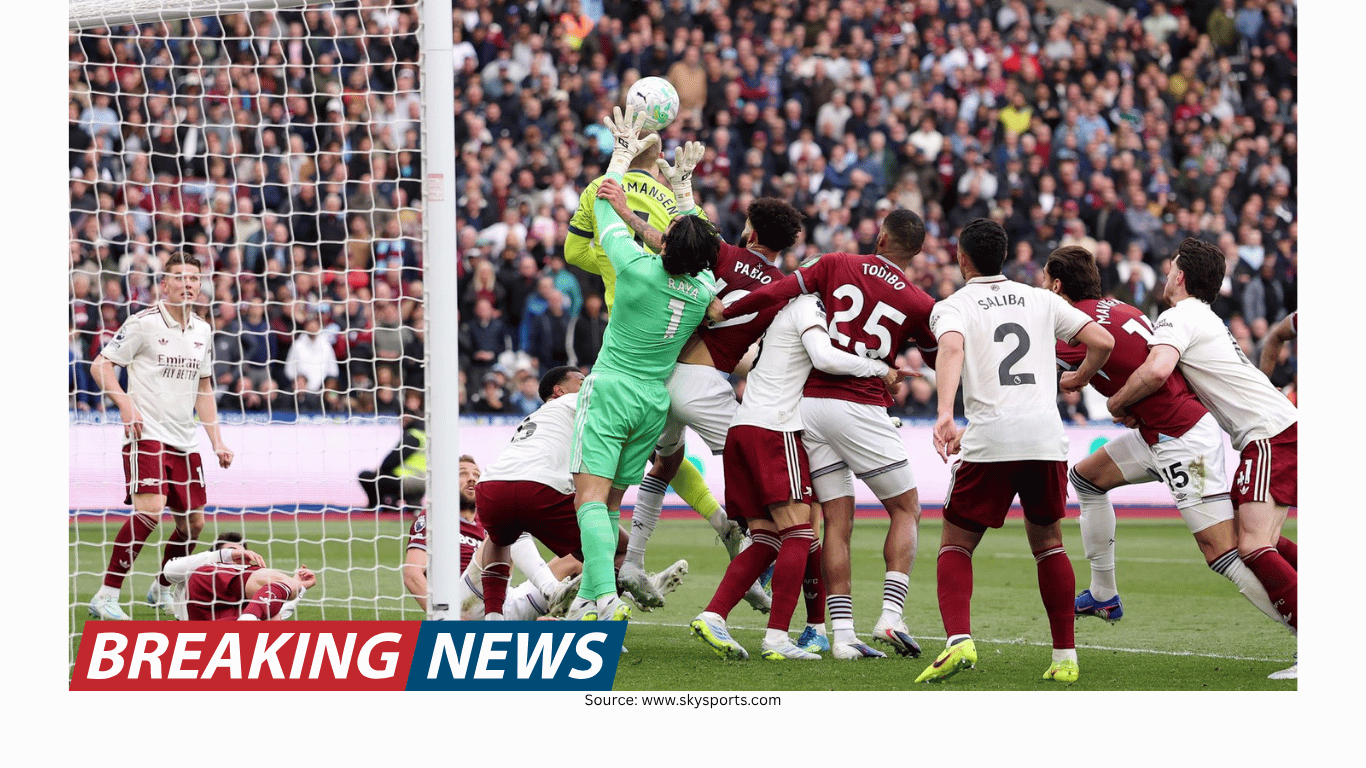
A late goal, a long review, and a decision that shaped the night
Arsenal’s 1-0 win at the London Stadium was decided not only by what happened during the 90 minutes, but by a stoppage-time incident that triggered one of the most scrutinised VAR interventions of the season. West Ham believed they had rescued a point in the 95th minute when Callum Wilson bundled the ball over the line, a moment initially confirmed by referee Chris Kavanagh on the pitch.
However, what followed was a lengthy video review that ultimately overturned the on-field decision. After being advised by VAR official Darren England to review the incident at the pitchside monitor, Kavanagh watched 17 replays and, after four minutes and 17 seconds of stoppage, ruled out the equaliser for a foul by Pablo on Arsenal goalkeeper David Raya.
The emotional swing was immediate: West Ham’s celebrations were replaced by frustration, while Arsenal’s relief was unmistakable. The match ended 1-0, but the debate around the disallowed goal continued long after the final whistle.
Gary Neville: ‘The biggest moment in VAR history’
Former Manchester United defender and television pundit Gary Neville framed the decision in historic terms, calling it the “biggest moment in VAR history” as he reacted to the late drama. On commentary, he described the sequence as “an earthquake, a tremor of a moment,” emphasising the scale of the consequences attached to a single call.
Neville’s assessment was rooted in what he saw as the weight of the decision for Arsenal’s title ambitions. He suggested that Arsenal’s first league title in 22 years could hinge on moments like this, with the intervention potentially preserving a result that keeps their campaign firmly on track.
He also highlighted the pressure on the officials involved, noting the scrutiny placed on Darren England in such a high-stakes situation. Neville pointed out that England, who is also an FA Cup final referee, faced a moment of intense pressure as the VAR process unfolded in front of a tense stadium.
What VAR saw: the foul on David Raya
The disputed moment began with West Ham’s late push for an equaliser. Callum Wilson’s effort ended with the ball crossing the line despite Declan Rice’s attempt to prevent it. The referee awarded the goal on the field, and for a brief period it appeared West Ham had earned a point.
VAR’s focus then shifted to potential interference with the goalkeeper. After the review, Kavanagh ruled that Pablo had committed a foul on Raya, and the goal was disallowed. The process itself became part of the story: 17 replays, a pitchside monitor review, and more than four minutes of stoppage time added to the tension and the sense of occasion.
Neville later explained that, from his perspective, the incident evolved from a simple check on whether the ball had crossed the line into a more complex evaluation of contact on the goalkeeper. He said he initially wondered if the key issue would be the goal-line moment, but the review ultimately centred on whether Raya had been impeded.
Different voices, one conclusion among pundits: the call was correct
While the decision was controversial in the stadium, several prominent pundits agreed with the outcome once the replays were examined. Roy Keane argued that players have to expect VAR scrutiny in those situations and warned against making contact with a goalkeeper in a way that can be interpreted as a foul.
Keane’s view was blunt: if VAR is “going to check everything,” then players should avoid leaving a hand on the goalkeeper for several seconds. He acknowledged there was “all sorts going on” in the box, but felt Raya’s involvement in the play made the foul more likely to be given.
Jamie Redknapp described it as a “brave VAR call” but said it was “the right one.” Former Arsenal and West Ham striker Ian Wright also supported the decision, saying it was “without doubt” correct. Wright argued that Raya would have caught the ball cleanly if he had not been impeded, pointing to the pulling and the arm across the goalkeeper.
Neville’s focus on process: composure under pressure
Beyond calling it a landmark moment, Neville also spent time discussing how the decision was reached. On his podcast, he said he was impressed by England’s composure during the review, describing how the VAR team “walked through it” and communicated clearly with the referee.
Neville noted that viewers at home benefit from access to the audio and angles that can help explain how a conclusion is reached, and he suggested that fans in the stadium do not always get the same clarity. In his account, England checked multiple elements around the incident and ultimately determined that the prolonged nature of Pablo’s arm across Raya made it difficult to ignore.
He added that if the contact had been more fleeting—part of a normal movement while challenging for the ball—the outcome might have been different. But he believed the sustained impediment, combined with the fact Pablo was not playing the ball, meant VAR “had to” intervene.
What the result means for Arsenal’s title push
The disallowed goal carried major implications at the top of the table. With the 1-0 win intact, Arsenal’s fate remains in their own hands, and they are now two wins away from clinching the Premier League title. That context is central to why Neville and others framed the incident as a defining moment.
Arsenal manager Mikel Arteta described the day as a “rollercoaster of emotions,” acknowledging the challenge of the occasion. He said Arsenal expected a tough match, pointing to West Ham’s urgency and the different pressures on each side: West Ham fighting for survival and Arsenal pursuing the league.
Arteta also praised the officials, saying it takes “a lot of courage and bravery” to send the referee to the monitor and allow a review in such a high-pressure moment. In his view, once the replay was seen, “there is no question that it is a clear foul.”
West Ham’s frustration: consistency and the ‘line’ in decision-making
For West Ham, the decision was difficult to accept, particularly given the timing and the emotional swing of believing they had equalised. Head coach Nuno Espirito Santo said the circumstances left the team upset, and he referenced past situations that he felt had been judged differently.
Nuno stopped short of escalating the dispute, but he underlined a broader concern: that similar incidents have occurred in recent seasons and that uncertainty over what constitutes a foul creates doubt. He also urged a wider view of the match itself, saying West Ham “made a very good match” against a “tough team,” even though they lost.
West Ham captain Jarrod Bowen was more direct in his criticism of how goalkeepers are treated in such scenarios. He argued that goalkeepers receive extra protection compared to outfield players and questioned whether officials would apply the same level of scrutiny to holding inside the penalty area in other contexts.
Bowen said a goalkeeper coming to claim the ball “has to expect contact,” describing physicality as part of Premier League football. He also voiced a familiar frustration with VAR: that if you look at something long enough, “you will find something to give.” His central question was about consistency—if this kind of contact is punished here, he argued, then it should be punished every week. “Where is the line and where is the bar?” he asked.
Relegation implications: pressure intensifies at the bottom
The consequences were not limited to the title race. West Ham’s defeat was their 18th loss of the campaign, and the result had significant ramifications at the bottom of the table as well. According to the match context, the outcome ensured the safety of both Nottingham Forest and Leeds.
That left West Ham’s situation increasingly precarious, with their only hope of avoiding relegation now resting on Tottenham dropping into the relegation zone. Spurs were said to be one point ahead of West Ham and were due to face Leeds on Monday Night Football.
In other words, the disallowed equaliser did not simply remove a point from West Ham’s tally; it also reshaped the wider picture around them. The late decision became a pivot point in a match that sat at the intersection of two high-stakes battles: a title chase and a relegation fight.
Why this incident will remain a reference point
Even among those who agreed with the final call, the incident raised familiar questions about VAR’s role and the experience of watching football in the modern era. The length of the review, the number of replays, and the shift from an on-field goal to a disallowed one all contributed to a sense that the match had been paused and then rewritten.
Neville acknowledged that many supporters are not fans of VAR, but argued that this was an example of the system reaching what he considered the correct outcome in a decisive moment. He also suggested that the intervention may have prevented a result that “wouldn’t have been right,” while simultaneously keeping Arsenal’s title momentum intact.
At the same time, West Ham’s comments reflected an ongoing tension: when incidents are interpreted differently across matches, the debate becomes less about one specific call and more about the standards used to make them. The disagreement, then, is not only about whether there was contact, but about how that contact is judged and how consistently those judgments are applied.
Key points from the match and the VAR controversy
West Ham thought they had equalised in the 95th minute through Callum Wilson, and the goal was initially awarded by referee Chris Kavanagh.
VAR official Darren England recommended an on-field review, and Kavanagh watched 17 replays before disallowing the goal for a foul by Pablo on David Raya.
The review took four minutes and 17 seconds, adding to the drama and the debate around the decision-making process.
Gary Neville called it the “biggest moment in VAR history,” citing the potential impact on Arsenal’s title bid and West Ham’s survival fight.
Roy Keane, Jamie Redknapp and Ian Wright all agreed with the decision after reviewing the incident.
West Ham’s Nuno Espirito Santo and captain Jarrod Bowen questioned consistency and the level of protection given to goalkeepers.
Arsenal manager Mikel Arteta praised the officials’ bravery and said the replay showed a clear foul.
A match settled by margins, remembered for the moment
Arsenal left east London with a 1-0 victory that keeps their title pursuit in their own hands, but the defining image of the night was not a goal scored in open play. It was the stoppage-time sequence: the ball over the line, the initial award, the long wait, and the final ruling that it would not stand.
For Arsenal, it was a moment of relief and validation, reinforced by their manager’s support for the officials and by pundits who felt the correct decision was reached. For West Ham, it was a moment of anger and disbelief, sharpened by the sense that similar contact has been treated differently and by the broader fear of what a lost point could mean.
Whether supporters see it as a necessary correction or an unwelcome intrusion, the incident has already taken on a significance beyond a single match. As Neville suggested, it may be remembered not simply as a VAR call, but as a turning point with consequences at both ends of the Premier League table.