
PSG hold Bayern in Munich to reach Champions League final against Arsenal
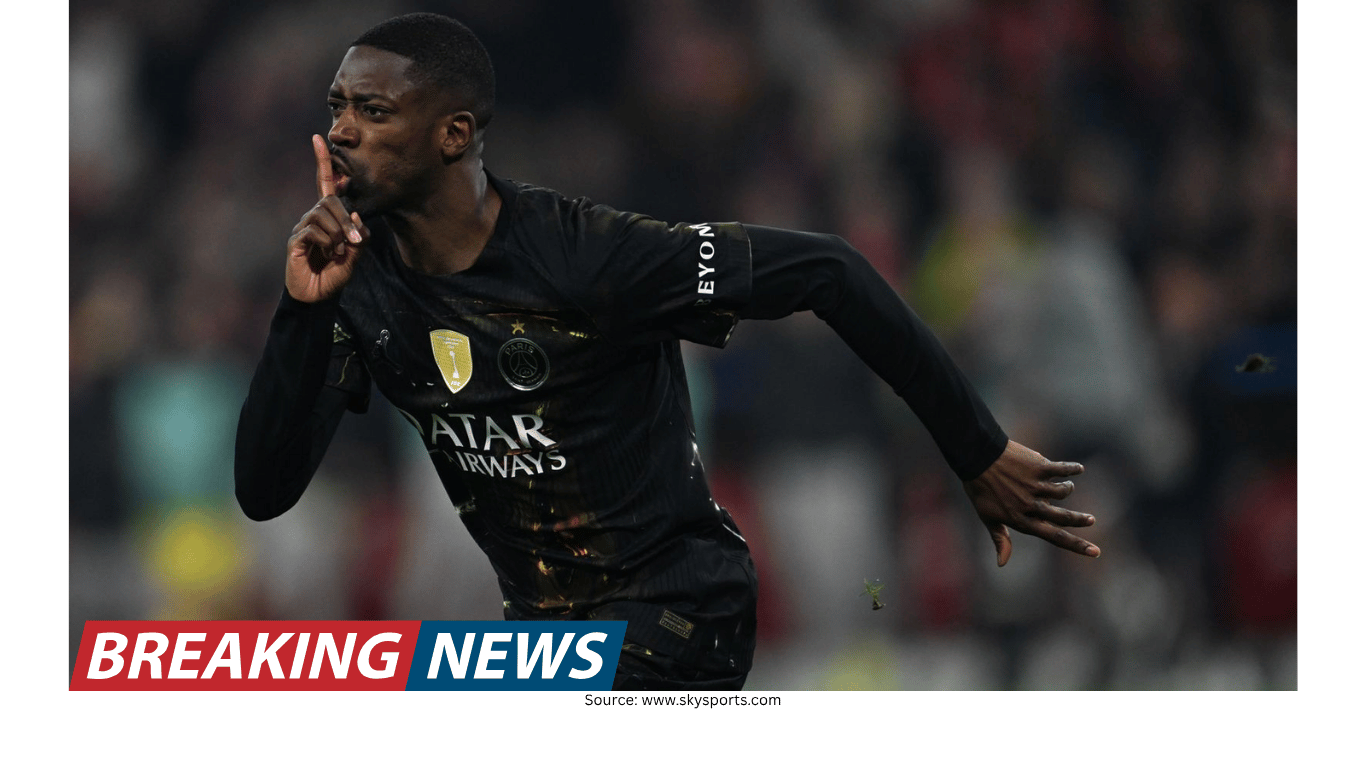
PSG complete semi-final job in Munich to set up Arsenal final
Paris Saint-Germain booked their place in the UEFA Champions League final with a controlled 1-1 draw away at Bayern Munich, progressing 6-5 on aggregate. Luis Enrique’s side will meet Arsenal in the final on May 30 after navigating a tense second leg that never reached the attacking chaos of the first meeting.
PSG’s early breakthrough shaped the night. Ousmane Dembele struck after just three minutes, finishing from a dangerous cross delivered by Khvicha Kvaratskhelia. With that, the French side moved further in front overall and were able to lean into a game plan built around maturity, defensive discipline and selective bursts of threat on the counter.
Bayern, who arrived needing to chase the tie, struggled to generate the kind of sustained pressure that typically defines their home performances. Their response came only at the very end, when Harry Kane scored a late goal on 94 minutes. It was a consolation on the night and not enough to prevent elimination.
An early goal, then a professional PSG display
The opening minutes brought the kind of spark that suggested another high-scoring contest might be on the way. Dembele’s goal came quickly and decisively, the winger “crashing home” Kvaratskhelia’s cross to give PSG a dream start in Munich.
Yet rather than spiralling into another end-to-end shootout, the match settled into a pattern PSG appeared comfortable with. They “put in a really mature display” and succeeded in stifling Bayern’s attacking rhythm for long stretches. The German champions’ threat was described as limited, with PSG’s structure and composure taking the edge out of a situation that could have become frantic.
For Bayern, the challenge was not only the aggregate deficit but also PSG’s control of key moments. The visitors were able to slow the game at times, defend their box, and still look capable of creating chances when opportunities appeared.
Bayern’s brightest moments and PSG’s control
Bayern did have moments, particularly through Michael Olise, who looked their most dangerous player. In the first half he curled a chance over, and later PSG goalkeeper Matvey Safonov dealt with comfortable efforts from Olise and Luis Diaz in the second period.
But even with Bayern pushing for a way back into the tie, the sense after half-time was that PSG were more likely to score again than Bayern were to produce the sequence of goals required. Despite Bayern facing a two-goal aggregate deficit at the interval, the second half did not develop into a siege.
PSG continued to carry threat. Desire Doue and Kvaratskhelia both tested Manuel Neuer after the break, while substitute Bradley Barcola went close late on. Those chances mattered because they reinforced PSG’s ability to play on the front foot when needed, rather than simply defending deep for 45 minutes.
Late Kane strike changes the scoreline, not the outcome
The final moments delivered Bayern’s goal, but too late to shift the tie. Kane scored with a left-footed finish on 94 minutes, described as his only real opportunity of the night. It ensured Bayern avoided defeat on the night, but the overall picture remained unchanged: PSG had done enough across both legs to progress.
From Bayern’s perspective, the late strike underlined how hard it had been to create clear openings. Coming into the match, they had scored at least three times in each of their last six home games, a statistic that made their relative lack of attacking output in this semi-final stand out.
For PSG, the closing stages still required concentration, but the broader story was their ability to manage the second leg with minimal panic, even as the pressure of a one-goal game lingered right until stoppage time.
Handball debates and a key first-half flashpoint
The match also featured significant officiating controversy, particularly in the first half. Bayern felt PSG left-back Nuno Mendes should have been sent off for deliberate handball while already on a booking. Instead, referee Joao Pinheiro awarded a foul in the opposite direction for what was described as a questionable handball by Konrad Laimer.
There was another unusual incident involving Joao Neves. He appeared to handle the ball inside the box after Vitinha’s clearance. However, the rules state that a player cannot be penalised for handball if the ball inadvertently touches him after being kicked by a team-mate. That interpretation meant no penalty was awarded, a decision that irritated Bayern head coach Vincent Kompany after the final whistle.
Kompany’s frustration centred on the contrast between handball decisions across the two legs. While acknowledging the rulebook, he argued for “a little bit of common sense” when similar-looking incidents are judged differently due to technical distinctions. He also suggested that the referee may have hesitated to issue a second yellow card in the first half, believing the official initially looked set to do so before changing the decision.
Quotes: Kompany points to fine margins and key decisions
After the match, Kompany said Bayern had to review “some of the phases that were decided by the officials across the two games,” adding that while it was “never an excuse,” it still “matters.” He felt that, over the course of both legs, “probably too much went against us,” even as he praised his players’ effort against “a very good PSG team.”
On the handball decisions, Kompany explained his view of the inconsistency. Regarding the first-leg incident, he described a situation where the ball went to a player’s body and then to his hand at close range, but still resulted in a penalty due to the “trajectory of the cross.” In the second leg, he noted, Neves’ hand was “there in the air” and the ball hit it, but the fact it came off a team-mate meant it was not a penalty. “If you look at both phases,” Kompany said, “there needs to be a little bit of common sense. It’s ridiculous.”
He also questioned the first-half moment involving Laimer, saying he had seen angles suggesting Laimer did not touch the ball with his hand. “They say he did. I don’t know,” he added.
PSG mood: intensity, character and another final
PSG’s camp struck a more celebratory tone, focusing on the performance and the achievement of reaching another final. The team spoke about the intensity of the contest and the character shown against a Bayern side that plays “football at the highest level.”
One PSG voice highlighted how the match demanded emotional control and resilience, suggesting the defence had been stronger than the attack on the night. The overall feeling was that the tie represented a significant test, and that coming through it offered encouragement ahead of the final.
There was also a personal note in the post-match reflections, with mention of an upcoming birthday and a desire to provide supporters with a special occasion by reaching the final.
Kvaratskhelia: early goal was crucial, focus now on the final
Kvaratskhelia, named Player of the Match, emphasised the importance of PSG’s lightning start. He said the early goal was “very important,” explaining that he saw Dembele free and that the winger produced “a very good finish.” He praised Dembele and the wider group, describing the team spirit as “amazing” and expressing pride at being part of the squad.
Looking ahead, Kvaratskhelia framed the final as a major moment, calling it potentially “the best game in our life” and promising the team would “give everything for this cup.” While acknowledging the scale of the occasion, he stressed that PSG’s approach would be to focus on their own game rather than fixate on the identity of the opponent.
That opponent will be Arsenal, setting up a final that PSG reached by combining an early strike with a measured, disciplined performance in Munich.
Key performers and ratings snapshot
The match featured notable individual performances on both sides. For PSG, Kvaratskhelia’s influence was reflected not only in his assist for the opening goal but also in his overall threat, earning him the Player of the Match award. PSG’s midfield and defensive unit also drew praise within the match narrative for controlling Bayern’s attacking options.
On Bayern’s side, Olise was repeatedly identified as the brightest spark, while Kane’s late goal provided a final twist without changing the outcome. In goal, Neuer was tested after the break by Doue and Kvaratskhelia, while Safonov’s work for PSG consisted largely of saves described as comfortable until the late Kane finish.
- Scorers: Dembele (3’), Kane (90+4’)
- Aggregate: PSG win 6-5 over two legs
- Final: PSG vs Arsenal on May 30
What the result means
For PSG, the draw in Munich was enough to confirm progress and extend their Champions League run into a final against Arsenal. The second leg showcased their ability to protect an advantage with composure, while still carrying enough attacking threat to keep Bayern cautious.
For Bayern, the exit brought an abrupt end to hopes of adding more silverware this season. Kompany’s side could point to contentious moments and fine margins, but they also faced the reality of being largely contained over 90 minutes by an opponent that executed its plan effectively.
With the semi-final decided, attention now turns to May 30, when PSG will attempt to finish the job in the final against Arsenal.