
Mainoo’s late strike seals 3-2 Manchester United win over Liverpool and confirms Champions League place
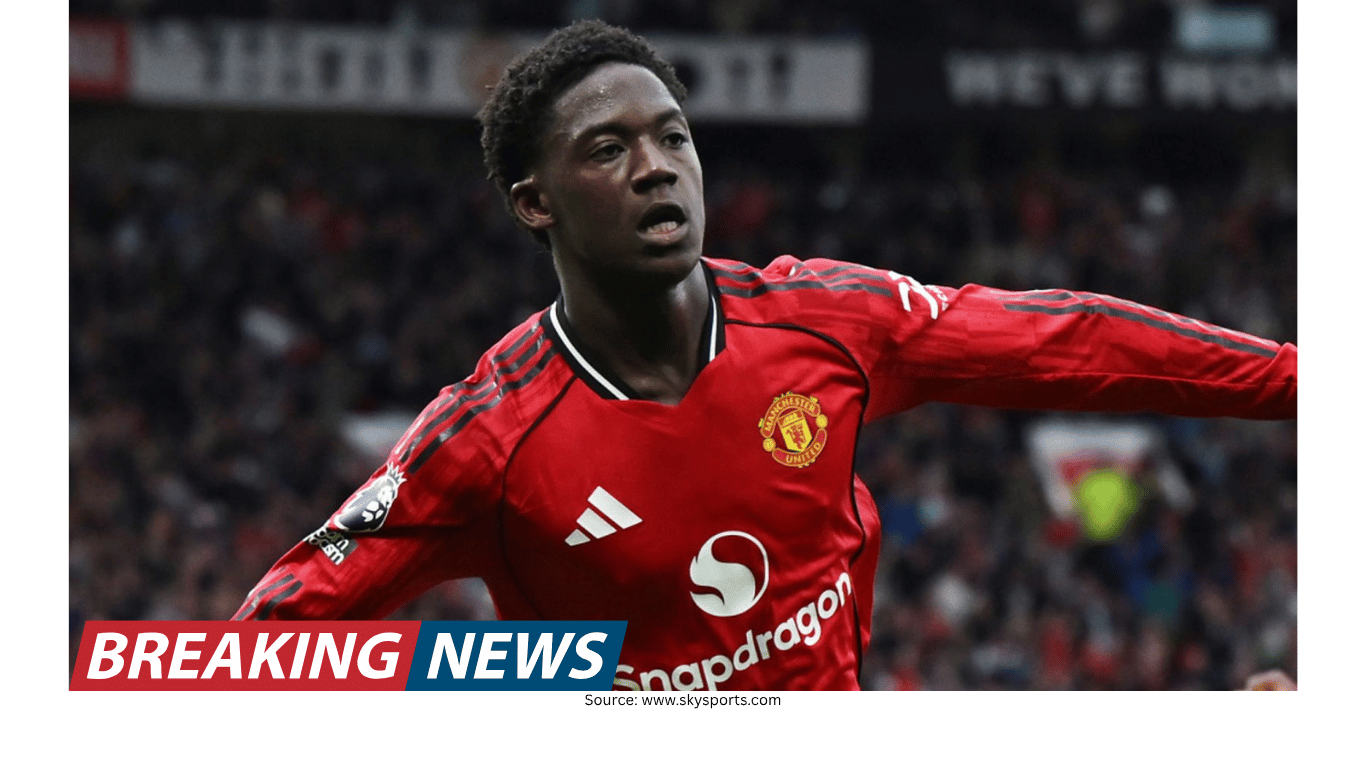
Old Trafford thriller ends with Mainoo as the difference
Manchester United and Liverpool delivered a five-goal Premier League contest at Old Trafford, played in front of an attendance of 74,027, and decided by a late Kobbie Mainoo winner. United ultimately prevailed 3-2 in a match that moved through distinct phases: an early home surge, a Liverpool fightback after the break, and a decisive moment from a young midfielder on the edge of the box.
Mainoo’s goal not only settled a rivalry game but also carried major implications in the table. The three points confirm that United will play Champions League football next season as they tighten their grip on third spot. Liverpool, meanwhile, remain fourth and still have work to do, with head coach Arne Slot facing continued scrutiny from supporters about the direction of the team.
United start fast: early lead and a second before the comeback
The opening stages belonged to the hosts. United struck first through Matheus Cunha, whose left-footed shot took a decisive deflection off the back of Alexis Mac Allister and beat goalkeeper Freddie Woodman. The goal gave United an early lead and set the tone for an assertive first-half performance.
United then doubled their advantage. Benjamin Sesko forced the ball home after Bruno Fernandes’ centre was pushed into his path by Woodman. At 2-0, United appeared to have control, with their attacking play producing tangible rewards and Liverpool needing a response to stay in the contest.
Liverpool rally after the break as United squander the advantage
The second half brought a shift in momentum. United, having built a two-goal cushion, were unable to protect it. Liverpool’s route back into the match was helped by a costly error: Amad Diallo, introduced as a substitute, gifted possession to Dominik Szoboszlai. The Liverpool midfielder capitalised with a fine solo goal that reduced the deficit and reignited the contest.
The equaliser followed after another key moment went Liverpool’s way. Senne Lammens’ poor kick was seized upon, and Cody Gakpo made it 2-2. From two goals down to level, Liverpool had dragged the match into a state where, as the game opened up, either side could have won it.
Mainoo’s winner: a decisive strike from the edge of the box
With the score at 2-2, the match entered a tense final stretch. It was at this point that Mainoo delivered the decisive action. When the ball fell to him on the edge of the penalty area, he fired hard and low beyond Woodman to restore United’s lead and secure the victory.
The winner crowned an influential performance from Mainoo, who was named Player of the Match. The narrative around his role added extra intrigue: he had previously been frozen out of the team by Ruben Amorim, yet here he was stealing the show under Michael Carrick in one of the season’s most dramatic games.
Champions League secured as United strengthen hold on third
The significance of the result extended beyond the rivalry. The win confirms that Manchester United will be in the Champions League next season, with the side strengthening their position in third place. For Carrick, the performance and outcome also fed into wider discussion about his standing, with former United captain Roy Keane having suggested beforehand that the result could have “a big bearing” on whether Carrick gets the job.
For Liverpool, the defeat leaves them fourth and still searching for consistency. The match illustrated both their ability to respond under pressure and the fine margins that can decide major fixtures, particularly away from home.
VAR debate: questions over Sesko’s goal and a possible handball touch
One of the major talking points centred on United’s second goal. Slow-motion replays later indicated that Sesko may have made a feather-like touch on the ball with his hand. Liverpool were left aggrieved because the initial replays shown during the VAR process did not appear to include that close-up view, and the goal was allowed to stand.
Slot was asked in his press conference whether the goal should have been disallowed. He suggested that if there was a touch, then by the rule it should not have counted, while also raising a broader point about what level of contact should be enough to overturn a goal.
- Slot argued that a change in the ball’s curve can indicate contact.
- He questioned whether the threshold for disallowing a goal should be debated.
- He said that if there was a touch, the rule would require it to be ruled out.
At the same time, Slot also pointed to Liverpool’s own role in conceding. He said the second goal was not conceded “because of the handball” but because Liverpool lost the ball in a “stupid position” and then lost key moments in duels afterwards.
Slot’s wider frustration: a season-long pattern in decisions
Beyond the single incident, Slot described what he sees as a recurring theme across the season, claiming that marginal decisions have repeatedly gone against Liverpool. He referenced examples from other matches and situations, including a penalty incident involving Paris Saint-Germain and Mac Allister, and a separate situation where a goalkeeper was on the floor injured and play was not stopped.
He also contrasted a moment in this match, saying he saw a United player off the pitch and the referee stopped the game when Liverpool tried to play on. Slot framed these as part of a “pattern” across the season, while also acknowledging that his focus should be on the aspects his team can control, such as avoiding switching off and conceding “ridiculous goals” even when he feels they are the better side.
Mainoo’s reaction: credit to the group and focus on finishing strongly
After the match, Mainoo highlighted the collective nature of the turnaround and the importance of maintaining momentum. He credited the players and the manager for the way United managed to win the game and stressed the need to finish the season strongly.
He also spoke about confidence within the squad, describing a sense of belief not only in himself but across the group. Mainoo added that the players want to “follow him and fight for him,” reflecting the team spirit United showed in a match that demanded resilience after surrendering a two-goal lead.
Carrick on Sir Alex Ferguson: concern before kick-off
The day carried an additional emotional layer at Old Trafford. News emerged that Sir Alex Ferguson had been taken to hospital before kick-off after feeling unwell. Carrick said he had heard about it before the game but did not have an update on Ferguson’s condition at the time he spoke.
Carrick added that he wished Ferguson the best and said he was “very affected” by the news. He also expressed hope that the result could give Ferguson a boost when he hears about it.
Tactical and identity questions for Liverpool as away issues persist
While Liverpool showed character to come back from 2-0 down, the broader assessment around the team remains complicated. Slot continues to be described as overseeing a transition, and Liverpool were without a trio of forwards who he will feel could have made a difference. Still, the concern among fans, as framed in the match analysis, is not simply that the team is changing, but what it is changing into.
The comeback was sparked by pressing, which supporters would recognise as part of the club’s identity from recent years. The analysis suggested that fans would embrace a Liverpool side that tweaks the model established under Jurgen Klopp, but that a more sterile possession approach could feel like a divergence too far. As a result, the questions around Slot are likely to continue.
Away-day first halves: a worrying trend highlighted again
The match also fed into a wider critique of Liverpool’s away form. The analysis described an “away-day malaise” that is becoming less of a blip and more of a pattern, with a passivity in first-half approaches on the road that appears at odds with the club’s traditional intensity.
Another blank before the break at Old Trafford sharpened that concern. Liverpool now have just four goals in their last 19 first halves, a stark drop-off for a team with attacking quality and expectation. The issue, as described, is not only finishing but urgency: slow tempo, disjointed pressing, and an approach that can look reactive rather than proactive.
For a club that expects to chase major honours, that first-half trend was characterised as an embarrassing quirk in what has been described as a wretched season.
Key match details: scorers, standout performers, and ratings
United’s goals came via Cunha’s deflected opener, Sesko’s close-range finish for 2-0, and Mainoo’s late winner from the edge of the box. Liverpool’s comeback was driven by Szoboszlai’s solo effort and Gakpo’s equaliser after Lammens’ poor kick.
Player of the Match went to Mainoo, whose decisive contribution matched his overall influence on the game. The match also included notable individual performances reflected in the ratings, with Szoboszlai receiving an 8 for Liverpool and Mainoo an 8 for United.
- Manchester United (selected ratings): Mainoo 8, Cunha 8, Dalot 7, Maguire 7, Casemiro 7, Fernandes 7, Sesko 7.
- Liverpool (selected ratings): Szoboszlai 8, Gakpo 7, Robertson 6, Gravenberch 6, Woodman 6.
What the result means
For Manchester United, the immediate outcome is clear: Champions League football next season is confirmed, and a dramatic win over a major rival strengthens the sense of momentum around Carrick’s side. For Liverpool, the match was another example of both their capacity to respond and the costly nature of individual moments, with the added backdrop of ongoing debate about decisions, identity, and away-game patterns.
In the end, the contest turned on a single late strike. In a match of swings and controversies, Mainoo’s composed finish ensured United were the ones celebrating at Old Trafford.