
Everton held by Leeds as Barry’s late equaliser earns 1-1 draw
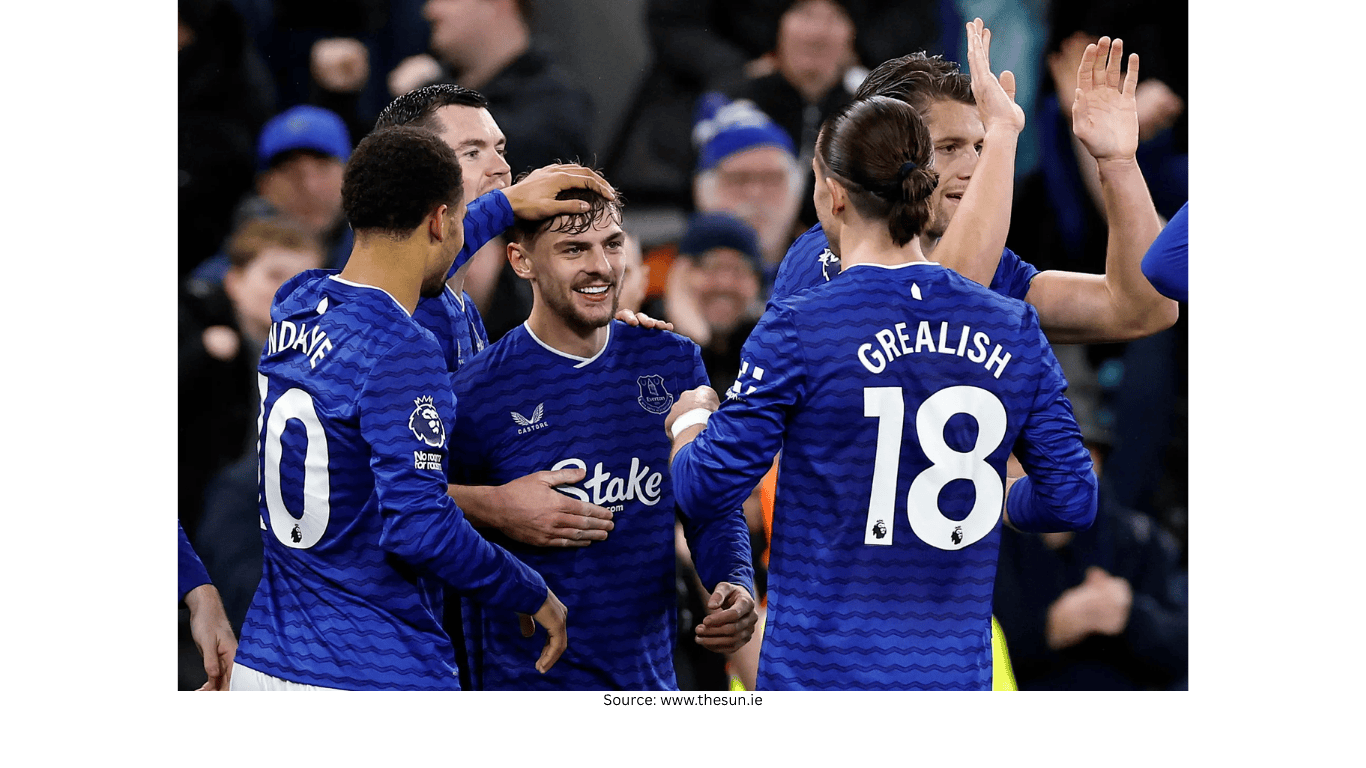
Barry keeps scoring as Everton and Leeds share the points
Everton and Leeds United played out a 1-1 draw in the Premier League at Hill Dickinson Stadium, with Thierno Barry again proving decisive in front of goal. The forward struck in the 76th minute to cancel out James Justin’s first-half opener and ensure David Moyes’ side avoided defeat in a match that looked to be slipping away at the interval.
For Everton, the result extended a frustrating run at home: they are now winless in five league games on their own ground. Yet the point was not without value, nudging them into the top half of the table after a second-half response that was far sharper than what came before it.
Leeds, meanwhile, will view the evening with mixed emotions. As the team in 16th place, they remain six points above the drop zone and will take encouragement from a strong first-half display away from home. At the same time, they were unable to turn control into a second goal, and that left the door open for Everton’s late push.
The match was watched by an attendance of 51,979, and it unfolded in two distinct halves: Leeds’ dominance before the break and Everton’s improvement after it.
Leeds take deserved lead through Justin
Leeds’ opening goal arrived in the 28th minute and reflected the pattern of the first half. James Justin finished from Anton Stach’s cross, giving the visitors a deserved advantage after a period in which they repeatedly found ways into Everton’s half.
The visitors’ approach brought volume and pressure. By half-time, Leeds had registered 10 attempts, while Everton had failed to record a shot on target. The imbalance was reflected in the mood around the ground, with Everton booed off at the interval after a flat opening 45 minutes.
There was nearly an additional twist shortly after Justin’s goal. Dominic Calvert-Lewin, playing his first match against Everton since joining Leeds in the summer on a free transfer, came close to scoring against his former club when he struck the post six minutes later. It was a moment that underlined Leeds’ threat and Everton’s vulnerability during a first half that did not resemble the home side at their best.
Everton struggle before the break as Leeds control the tempo
Everton’s problems were not limited to one area. They struggled to compete for second balls and were often a step behind Leeds in key moments. The visitors were first to more challenges, moved the ball with confidence, and prevented Everton from building sustained attacks.
From Everton’s perspective, the lack of attacking output was stark. Without a shot on target in the first half, they rarely forced Leeds goalkeeper Karl Darlow into action. The home side’s wide players and attacking midfielders found it difficult to create clean openings, while Leeds’ structure helped them keep the game in front of them.
It was the type of first-half performance that invited criticism, and the assessment from Sky Sports’ Jamie Carragher was cutting, suggesting Everton had made Leeds “look like Real Madrid.” The comment captured how comfortable Leeds appeared and how far Everton were from setting the tone at home.
Moyes changes shape at half-time and Everton improve
David Moyes acted decisively at the interval, making a double substitution designed to address both Everton’s shape and their competitiveness. Jarrad Branthwaite and Kiernan Dewsbury-Hall were introduced at half-time, with Moyes looking to match Leeds’ three-at-the-back system and bring more control to Everton’s play.
The shift had an immediate effect. Everton played with more purpose in the second half, finding better angles in possession and applying more pressure higher up the pitch. The game became less one-sided, and Leeds were forced to defend deeper for longer spells as Everton’s tempo increased.
In Moyes’ own words, the changes were partly driven by how poorly Everton had played before the break. He admitted disappointment with the first-half set-up and acknowledged that it “didn’t really work as well as we’d have liked.” He also stressed that the second half was “much better,” crediting his players for sticking at it even when it did not look like a goal was coming.
Moyes explained the thinking behind the substitutions in blunt terms, saying he hoped Everton “couldn’t play any worse” than they had in the first half. He felt Leeds had been first to too many balls and that Everton “didn’t compete well,” adding that it “wasn’t like us.” With several players returning but not fit enough to start, Moyes said he may have gone “a bit early” on Branthwaite and Dewsbury-Hall, but believed he had to try something to change the game. In his view, both substitutes did make a difference.
Barry’s 76th-minute goal rescues a point
Everton’s equaliser finally arrived in the 76th minute, and once again it was Thierno Barry at the centre of it. The striker poked in from Idrissa Gueye’s cross to make it 1-1, a finish that reflected both Everton’s increased urgency and Barry’s growing confidence.
The goal continued a remarkable shift in Barry’s season. After scoring just once in his first 18 league appearances, he has now found the net four times in his last five top-flight games. That run has not only boosted Everton’s results but also changed the tone around his contribution, with his recent output providing a clear counterpoint to the team’s broader frustrations at home.
Barry’s impact was recognised officially as he was named Player of the Match. In a contest where Everton needed a moment of quality and composure in the final third, he delivered it.
Everton go close to a winner as Gueye hits the bar
After drawing level, Everton briefly looked capable of completing the turnaround. Just two minutes after Barry’s equaliser, Idrissa Gueye struck the bar, a near miss that would have changed the narrative of the evening entirely.
The chance was a reminder that momentum had swung. Everton, so subdued in the first half, were suddenly creating moments that tested Leeds and lifted the stadium. However, despite the late pressure, they could not find a second goal, and the match ended with the points shared.
For Everton, Moyes suggested there was a sense of misfortune in not taking all three points, noting that his side were “a bit unfortunate not to get a second one.” Still, the broader picture remains complicated: the draw moved them into the top half, but their winless home run has now stretched to five league games.
Leeds reflect on a missed opportunity despite a useful away point
Leeds head coach Daniel Farke described the result as a “good” one for a promoted side, particularly given the difficulty of playing at Everton and the way the home team improved after the break. From his perspective, taking a point from a challenging away fixture represented progress and resilience.
Yet Farke also made clear that Leeds felt they had left something on the table. He called the first half an “excellent performance,” saying his team were “very dominant,” did not allow chances for Everton, and “should’ve scored the second goal.” In his view, Leeds “should’ve buried the game in the first half,” a statement that reflected both their control and the narrow margin by which they ultimately failed to win.
Farke also acknowledged the inevitable shift that can happen in matches where the opposition has quality on the bench. He said it was “always clear” Everton would show up at some point because of the players they were able to bring on, and that moment arrived after half-time as Everton’s structure and intensity improved.
Assessing the second half, Farke noted Everton had more possession, but said his “gut instinct” was that Leeds still controlled the game without the ball. He pointed to Darlow making one good save and the crossbar strike as key moments, adding that aside from those incidents and the equaliser, Leeds largely limited Everton’s threat.
In the context of Leeds’ season, the draw also keeps a spotlight on their away form. They remain with only one away league win this season, an ongoing issue even as they maintain a six-point cushion above the relegation places.
Key performers and match ratings
Barry’s equaliser and overall influence made him the standout figure, but several players shaped the contest in different phases.
- Everton: Jordan Pickford, Nathan Patterson, James Tarkowski, O’Brien, Vitaliy Mykolenko, Idrissa Gueye, James Garner, Dwight McNeil, Armstrong, Ndiaye, Thierno Barry.
- Everton substitutes: Jarrad Branthwaite, Kiernan Dewsbury-Hall, Dibling, Beto.
- Leeds: Karl Darlow, Rodon, Bornauw, Struijk, Bogle, Ampadu, Gruev, James Justin, Stach, Aaronson, Calvert-Lewin.
- Leeds substitutes: Tanaka, Buonanotte, Longstaff, Okafor.
Justin’s goal and overall first-half contribution stood out for Leeds, while Everton’s improvement after the interval owed much to the impact of Branthwaite and Dewsbury-Hall, as well as the increased involvement of Gueye and Garner in midfield.
What the draw means for both sides
Everton will take encouragement from the way they responded after an unacceptable first half, particularly given the lack of rhythm and threat they showed before the break. The tactical adjustment and substitutions changed the game, and the late push suggested there is more to come once more players return to full fitness.
At the same time, the inability to win at home continues to hang over their campaign. Five home league games without a victory is a run that inevitably adds pressure, especially when the team’s first-half performances leave them chasing matches.
For Leeds, the point is a reminder that their approach can travel, at least in spells. They were organised, dangerous, and confident for long periods, and they came close to taking a more significant result when Calvert-Lewin hit the post and when their first-half dominance limited Everton to no shots on target.
But the match also reinforced a familiar theme: failing to turn control into a decisive second goal can be costly, particularly away from home. Leeds remain outside the relegation places with a six-point cushion, yet their limited number of away wins suggests there is still work to do to convert performances into three points.
Looking ahead
With the match finishing 1-1, both teams leave with different emotions. Everton will feel they salvaged something after being second-best for 45 minutes, while Leeds may feel they allowed a winnable game to drift.
Attention now turns to Leeds’ upcoming home match against Arsenal at Elland Road. Jamie Carragher suggested it could be a tight contest, predicting that if Arsenal win it may be “by the odd goal,” noting their reliance on set-pieces and arguing that Leeds could stay in the game for a long time, helped by the atmosphere that has contributed to notable results.
For Everton, the challenge is to carry the second-half intensity into their next outing and to translate improved spells into complete performances. Against Leeds, they found a way back through Barry’s finishing and a more effective structure. The next step is ensuring they do not need a rescue act at all.
On this evidence, the draw was fair across the full 90 minutes: Leeds were the better side in the first half, Everton the more threatening in the second, and Barry’s continued scoring run ensured the contest ended level.