
Champions League league phase ends in chaos as Benfica survive, seedings set for knockout playoff draw
A final night designed for drama
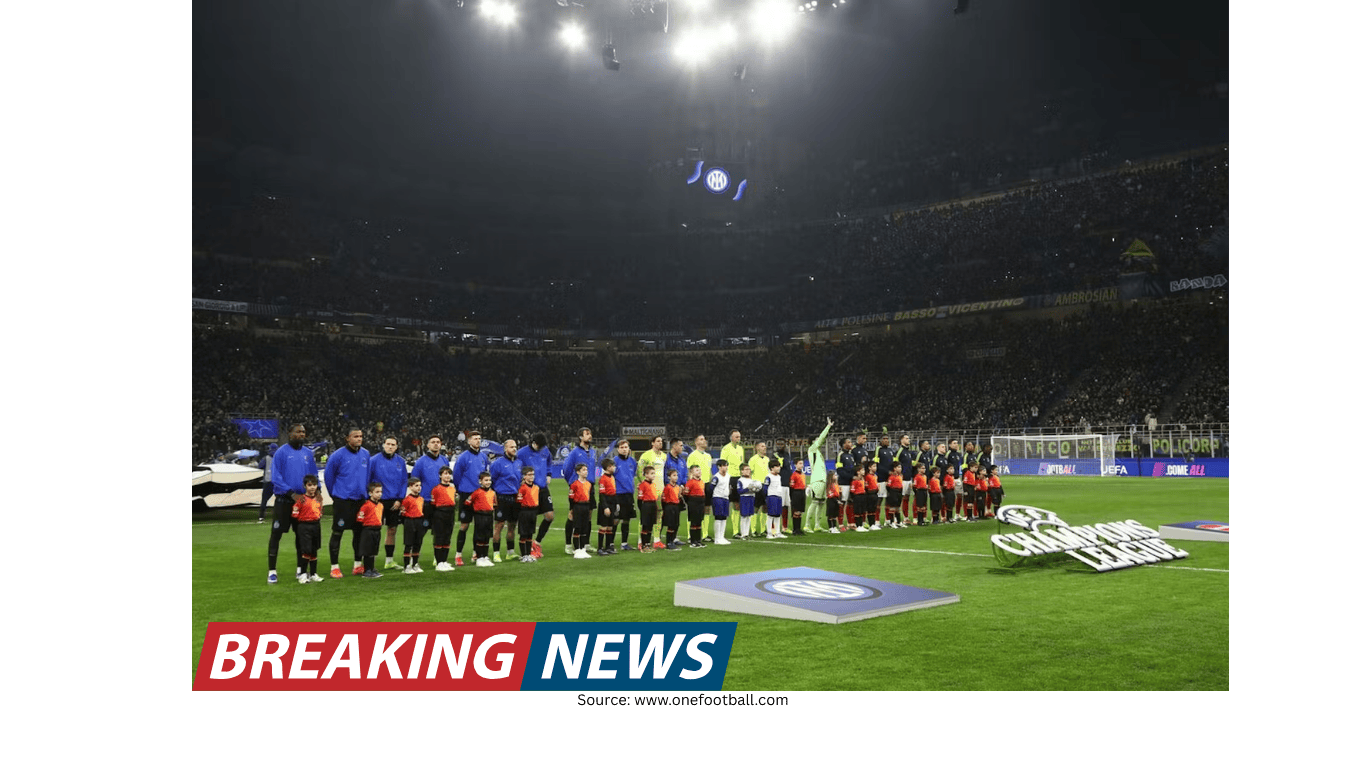
The UEFA Champions League’s league phase ended with a rare, high-wire spectacle: 18 matches played at the same time on Matchday 8. The format ensured that goals in one stadium instantly changed the stakes in another, and the closing minutes delivered the kind of chaos the competition has long marketed as its signature.
By the end of a frantic Wednesday night, the league phase was complete, the seedings were set, and the stage was prepared for Friday’s knockout playoff round draw. Yet the talking points went far beyond who finished where. The night produced a goalkeeper’s decisive goal, a reshuffled pecking order involving Real Madrid, and renewed arguments about whether the new league-phase model is a step forward or an exercise in unnecessary expansion.
Trubin’s stoppage-time header: a goalkeeper’s goal with real consequences
The defining image of Matchday 8 was as improbable as it was consequential: Benfica goalkeeper Anatoliy Trubin scoring in stoppage time to seal his team’s place in the knockout phase. It was a moment that Benfica supporters will replay for years, and one that neutrals often claim they want more of—football at its most unplanned and emotionally unfiltered.
The context made it even sharper. Benfica’s late push was shaped by José Mourinho’s decision-making on the touchline, including the instruction for Trubin to go forward for a last-ditch set piece. Commentators noted the delivery was perfect, and that Thibaut Courtois—who had made major saves earlier—could not keep out the header. The goal arrived deep into injury time and, crucially, with what was described as the last touch of the game.
Several observers emphasized the layers that turned the incident into a near-instant classic: Mourinho facing a former club; Benfica’s earlier struggles in the league phase; the opponent being Real Madrid; and the sheer novelty of a goalkeeper scoring a goal that directly changes a club’s European trajectory. There was even an added note of absurdity: Trubin, moments before scoring, appeared to be time-wasting, not fully registering that Benfica still needed another goal.
The immediate impact was twofold. Benfica secured a playoff spot, and Real Madrid’s position shifted in a way that now forces them into extra games. For a club whose Champions League identity is intertwined with inevitability, being pushed into the playoff round for a second consecutive year under the new structure was treated as a significant development—even if Madrid remain, on paper, heavy favorites in most matchups.
Why Mourinho’s presence still matters to the competition
Beyond the goal itself, the night reinforced a familiar truth about elite football: personalities are part of the product. More than one voice argued that the Champions League is simply better when Mourinho is involved, not only because of his tactical choices but because of the narrative weight he brings—especially when the tie involves a former club.
There was also an emotional coda. In the aftermath, Mourinho was described as being in tears as he headed down the tunnel after the final whistle. Whether one views him as a master of theatre or a relentless competitor, those images add texture to a tournament that can sometimes feel overly polished until the stakes become unmistakable.
Arsenal perfect, Chelsea survive, Napoli fall
While Benfica’s late twist stole the spotlight, the wider matchday contained plenty of substance. Arsenal completed a clean sweep, winning all eight of their league phase games. In a phase designed to reward consistency, that record stood out as an emphatic statement of control.
Chelsea also emerged with a result that carried major implications. Their 3-2 win in Napoli sealed a Top 8 spot for the Blues and eliminated Antonio Conte’s side in the process. The match was described as “topsy-turvy” and fun, but the consequences were severe for Napoli, who finished the campaign in a position that sparked criticism and questions about underperformance.
Seedings set: the playoff round and the teams outside the seeds
With the league phase now complete, attention shifts to Friday’s knockout playoff round draw. The draw will determine the next set of matchups and, for many clubs, whether the season’s European story becomes a brief detour or a springboard.
Among the teams not seeded for the knockout rounds were Borussia Dortmund, Olympiacos, Club Brugge, Galatasaray, AS Monaco, FK Qarabag, Bodo/Glimt and Benfica. The list underlines the mixed competitive landscape created by the league phase: established names alongside clubs whose presence at this stage is itself a notable achievement.
Bodo/Glimt’s progress was highlighted as a good story, though skepticism remains in some quarters about whether the playoff round is likely to produce major upsets. That question—what the additional round is truly for—sits at the heart of the broader debate about the format.
The format debate: brilliant drama or diluted build-up?
The league phase has become a lightning rod, and Matchday 8 did not settle the argument so much as intensify it. One side sees the final-night chaos as proof that the format works: it creates interconnected stakes, encourages attacking football, and delivers drama that can rival later rounds. Another side argues that the tournament has been stretched, that the extra matches increase player workload, and that the build-up can feel sterile until the final night forces the narratives into focus.
Critics described the league phase as “weeks and weeks of diluted nonsense” that only occasionally produces a payoff, and suggested that heavyweight clashes can feel less meaningful because the biggest clubs assume they will qualify anyway. Supporters countered that the peril is real across eight games, that dropped points early can derail a Top 8 finish, and that the stakes “start high and stay there” because the phase becomes a quest for near-perfection.
There was also discussion of incentives and seedings. The idea of giving the top teams home advantage in the knockout rounds was framed as an attempt to add meaning, but also as a change that could compromise the traditional purity of knockout football. Another proposal surfaced as a potential fix: allow the top seed to choose their opponent, then the second seed, and so on. Advocates argued this would make league-phase games more meaningful and add a new layer of drama, though it was acknowledged as an unpopular idea among most stakeholders.
Disappointments: Napoli, Villarreal, and others under the microscope
The final table inevitably produced a list of clubs whose campaigns did not match expectations. Napoli drew particular criticism. Their position near the bottom of a 36-team table was described as unacceptable for reigning Serie A champions, and specific results were cited as emblematic of their struggles: a 6-2 defeat at PSV Eindhoven and failing to beat Eintracht Frankfurt at home. Conte’s strong domestic record was contrasted with the view that he has not replicated that success in the Champions League.
Villarreal were also singled out repeatedly. One point from eight games was called an embarrassment for a side that is fourth in LaLiga. Observers noted that their table position looked worse after a heavy defeat to Dortmund left them with one point from five games, and that a subsequent drop in intensity may have followed. Still, the conclusion was blunt: a club performing strongly domestically should not be second-bottom in Europe’s top competition.
Particular lows were referenced, including defeats to Pafos and a home loss to F.C. København. Even with acknowledgments of difficult fixtures and the possibility of prioritizing LaLiga, the consensus among multiple voices was that there is “really no excuse” for the overall record.
Inter Milan were mentioned as a different kind of disappointment: not a collapse, but an underwhelming campaign relative to their status as last season’s finalists and their domestic form, where they are five points clear at the top of Serie A. The critique focused on a failure to assert themselves at home against Liverpool and Arsenal, and a defeat away at Atlético Madrid.
Other clubs were also described as having been poor, with Eintracht Frankfurt and Ajax Amsterdam both characterized as shambolic in the league phase.
Who looks best for the spring? Favorites remain a moving target
As the competition transitions from the league phase to knockouts, predictions become both irresistible and unreliable. Some argued that Arsenal and Bayern look like favorites now, but that the slate is effectively wiped clean once two-legged ties begin. In this view, league-phase form can be misleading, and the Champions League becomes “a completely different tournament” when it shifts into knockout football.
Real Madrid remained central to the discussion despite their uneven campaign. The case for Madrid was familiar: special players who can decide ties with moments, and the intangible weight of their Champions League history. Even amid turbulence, they are the kind of opponent few want to face in March and April.
Paris Saint-Germain were also a focal point, but opinions diverged sharply. Some backed PSG as the reigning champions and a team capable of peaking at the right time, citing how they surged in the latter part of last season. Others strongly disagreed, arguing that the current PSG side is a shadow of the one that dominated last season and that going back-to-back is difficult even without a drop in level.
Liverpool were framed as a potential knockout threat, particularly because of what Anfield can do in high-stakes European nights. One view suggested that Liverpool’s Premier League inconsistencies might matter less in Europe, where the style of play can be different, and that the absence of a spring title race could even help them focus on the Champions League.
Barcelona also drew mixed assessments. Some saw them as stable compared to Real Madrid, while others expressed doubts about defensive reliability, pointing to a lack of clean sheets in the Champions League and a high number of goals conceded, including three at Club Brugge and two at Slavia Prague.
Moments and performances that defined the league phase
Even in a format that divides opinion, the league phase produced a catalogue of moments that supporters will carry into the knockouts. Trubin’s goal sits at the top, but it was far from the only highlight mentioned.
Kylian Mbappé’s output for Real Madrid was repeatedly praised, including a four-goal haul at Olympiacos featuring a seven-minute hat trick. He was described as the competition’s top scorer so far, with 12 goals in seven games.
Vinícius Júnior’s performance against Monaco on Matchday 7 was highlighted for intensity, creativity, and a brilliant solo effort.
Lamine Yamal’s goal against Club Brugge was singled out not only for technique—an outside-of-the-boot finish after a sharp exchange—but also for coming in a chaotic 3-3 draw in Belgium.
Dominik Szoboszlai’s league-phase contribution for Liverpool was cited as standout, with four goals and three assists, including a pressure penalty away to Inter Milan and a clever free kick against Marseille.
Jens Petter Hauge’s goal for Bodo/Glimt against Manchester City was remembered as a defining night for the club’s supporters, featuring a feint away from Rodri and a guided finish into the top corner.
Marcus Rashford’s two goals for Barcelona against Newcastle United at St James’ Park on Matchday 1 were recalled as a reminder of his ability on the biggest stage, including a 20-yard strike.
There were also stories that captured the competition’s capacity for unlikely protagonists. One anecdote described 18-year-old Sherhan Kalmurza, making his first professional start for debutants Kairat Almaty away to Sporting CP, saving a penalty from Morten Hjulmand early in the match. The broader result did not go his team’s way, but the moment itself was presented as a brief window where “you believed in fairy tales.”
What comes next: the draw, the playoffs, and the return of knockout football
The league phase has now done its job: it has produced a table, created seedings, and set up Friday’s knockout playoff round draw. For some clubs, the extra round is an unwanted complication; for others, it is a lifeline earned through eight matches of shifting margins.
Real Madrid’s new reality—extra games before the traditional latter stages—adds a layer of risk and narrative, even if they remain one of the tournament’s most feared sides. Benfica, buoyed by a goalkeeper’s goal and Mourinho’s touchline decisions, move forward with momentum and a story that already feels bigger than a single result.
From here, the Champions League becomes what it is most remembered for: knockout moments, trophy-defining moments, and the thin line between control and chaos. The league phase may divide opinion, but Matchday 8 showed that when everything is on the line at once, the tournament can still produce the kind of night that makes football feel impossible to script.