
Doha ATP 500: Mensik stuns Sinner as Alcaraz survives Kachanov to set up semifinal clash
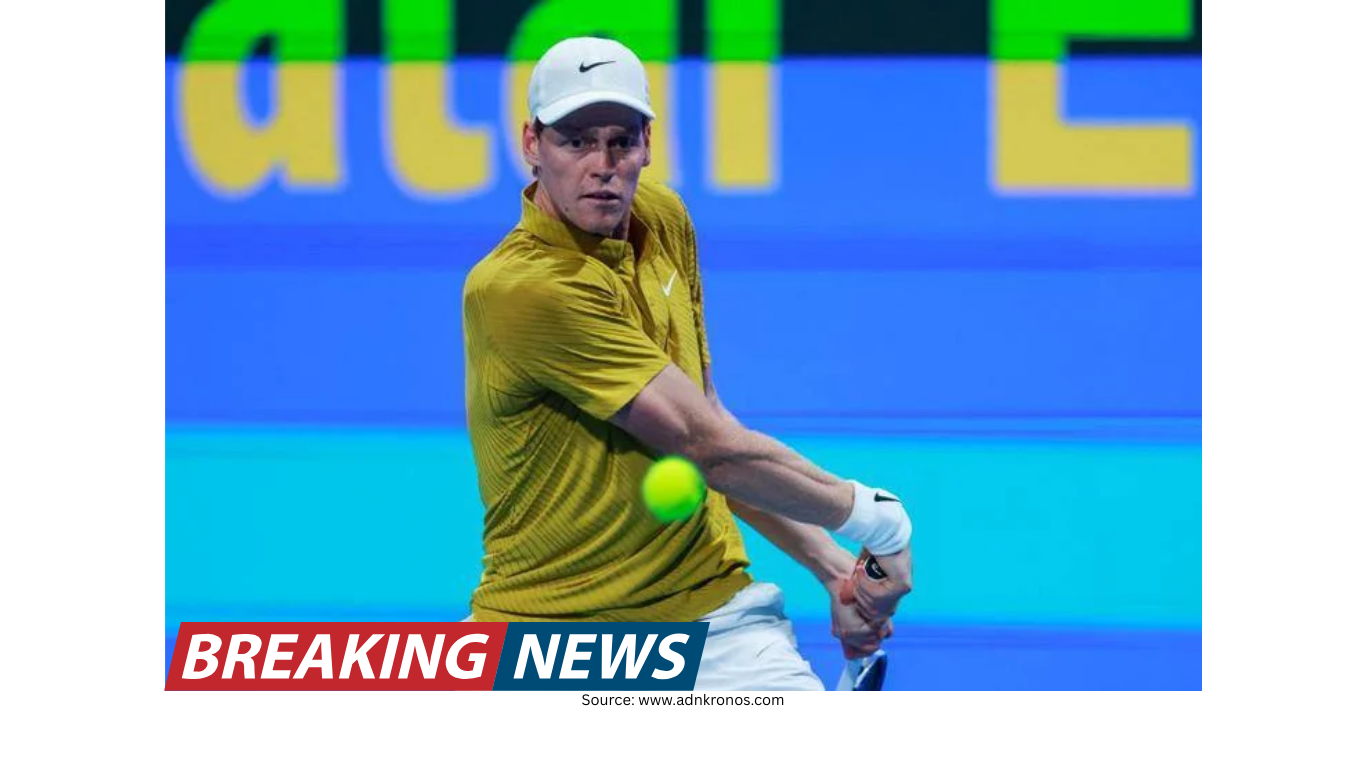
Mensik breaks the expected script in Doha
The most anticipated storyline at the ATP 500 tournament in Doha, Qatar, was the prospect of a final between Jannik Sinner and Carlos Alcaraz. Based on rankings and recent form, that matchup looked like the logical destination. Instead, the draw has taken a different turn, with a surprise quarterfinal defeat ending Sinner’s run and reshaping the final weekend of the event.
Sinner, the Italian ranked No. 2 in the world, was eliminated by Czech player Jakub Mensik, who won in three sets, 7-6, 2-6, 6-3, after a little more than two hours on court. The result ensured that the projected Sinner-Alcaraz final will not happen, at least not in Doha this week.
Mensik’s victory stands out not only for the name he beat, but also for the way the match developed: a tight opening set decided by a tiebreak, a strong response from Sinner in the second, and then a decisive shift early in the third that Mensik was able to protect until the finish.
How the quarterfinal unfolded: one tiebreak, one response, one decisive break
The first set was played on narrow margins. Neither player managed to create a break of serve, and the set moved game by game to 6-6. In the tiebreak, Mensik took control, winning it 7-3 to claim the opening set.
Sinner faced early pressure at the start of the second set and risked going behind, but the match changed direction quickly. The Italian raised his level, while Mensik’s intensity dipped, and Sinner capitalized by breaking serve twice in succession. That surge carried him to a 6-2 set win, restoring balance and appearing to put him in position to take over the contest.
The third set, however, produced the day’s key moment. Mensik struck immediately, earning an early break that gave him a lead he did not relinquish. He defended that advantage through the set and then, in the ninth game, broke Sinner’s serve again to close out what was described as the most prestigious win of his career so far.
Mensik entered the match as the world No. 16. The description of him in Doha was clear: a talent expected to grow significantly, with a game built on power on serve and accuracy in rallies. Against Sinner, those strengths were visible at the moments that mattered most, particularly in the opening tiebreak and in the early stages of the deciding set.
Sinner’s return to competition and the context of the season
Doha also carried added significance for Sinner because it marked an important phase of his return to match play. After his semifinal loss in Melbourne to Novak Djokovic, he was expected to come back and face a stretch of the season that he did not fully get to play last year.
That earlier absence was linked to a suspension agreed with the World Anti-Doping Agency in relation to the Clostebol case. With that period behind him, Doha represented an opportunity to restart competitive rhythm and build momentum. The quarterfinal exit means the immediate start has not been ideal, but the calendar provides quick chances to respond.
Attention will now shift to the Masters 1000 events in the United States, at Indian Wells and Miami, where Sinner will have the opportunity to find form and results on a bigger stage. In Doha, he encountered an opponent described as “of great respect,” and the match showed how thin the margins can be even for the very top players when a younger challenger executes confidently.
Mensik’s next test: a semifinal against Arthur Fils
With the quarterfinal win, Mensik advanced to the semifinals, where he is scheduled to face France’s Arthur Fils, ranked No. 40. Fils returned to competition two weeks ago after a six-month break due to injury and earned his place in the last four by defeating Czech player Jiri Lehecka, ranked No. 22, in straight sets, 6-3, 6-3.
The semifinal pairing sets up an intriguing contrast in circumstances: Mensik arriving with a high-profile win over one of the sport’s leading names, and Fils continuing his comeback with a convincing quarterfinal performance. Both players have navigated different routes to the same stage, and Doha will now offer each a chance to reach a tour-level final.
Alcaraz survives a long battle with Kachanov
While Sinner’s tournament ended in the quarterfinals, Carlos Alcaraz kept his campaign alive, though not without a significant test. The Spaniard needed three sets to overcome Russia’s Karen Kachanov, winning 6-7, 6-4, 6-3. The match lasted two and a half hours and required Alcaraz to come from behind after dropping the first set.
Kachanov pushed Alcaraz deep into the contest but ultimately could not produce the kind of upset that Mensik managed against Sinner. The difference was in the closing stages: Alcaraz steadied after the first-set loss, took the second set 6-4, and then completed the turnaround with a 6-3 third set.
The length of the Alcaraz-Kachanov match had a practical impact on the schedule as well. Sinner and Mensik were originally set to go on court at 7 p.m. Italian time, but they had to wait due to the unexpected extension of the preceding quarterfinal. That delay added another layer to the evening, with players adjusting routines and preparation as the timetable shifted.
Rublev awaits Alcaraz in the semifinals
Alcaraz’s reward for surviving Kachanov is another difficult challenge: a semifinal against Andrey Rublev, the defending champion in Doha. Rublev, ranked No. 18, advanced by beating Stefanos Tsitsipas in straight sets, 6-3, 7-6.
The scoreline suggests two different patterns within the same match. Rublev controlled the first set, while the second required a tiebreak, indicating Tsitsipas pushed him closer as the contest progressed. Still, Rublev held firm to secure his place in the semifinals and keep alive his chance to defend the title.
For Alcaraz, the matchup represents a meeting with a player who has already proven he can win this tournament. For Rublev, it is an opportunity to continue a title defense by overcoming one of the sport’s biggest names. With the projected Sinner-Alcaraz final now off the table, this semifinal becomes one of the central fixtures of the tournament’s closing stages.
Doubles: Bolelli and Vavassori stopped in the semifinals
The Doha event also delivered a notable result in the doubles draw, where Italy’s Simone Bolelli and Andrea Vavassori saw their run end in the semifinals. They were beaten again by the team of Finland’s Harri Heliovaara and Britain’s Henry Patten, the only pair described as having defeated the Italians twice.
That rivalry has developed over multiple tournaments. The same outcome occurred in January in Adelaide, and earlier at the Finals in Turin, again in the semifinals. In Doha, the pattern repeated, with Heliovaara and Patten winning in straight sets, 7-5, 6-4, to reach the final.
The repeated nature of the matchup adds a clear competitive edge to the pairing: Bolelli and Vavassori have been strong enough to reach the later rounds consistently, but have found this particular team a persistent obstacle. In Qatar, the margin was close—especially in the first set—but the result was the same, and it is Heliovaara and Patten who move on to play for the title.
Key results and what they mean heading into the final weekend
Doha’s quarterfinals did more than decide semifinalists; they shifted expectations. Sinner’s defeat removed one half of the final that many observers anticipated, while Alcaraz’s comeback ensured he remains in contention. Meanwhile, Rublev’s progress keeps the defending champion in the frame, and Mensik’s breakthrough win highlights the depth of competition at this level.
From a tactical perspective, the matches underscored familiar truths about top-level tennis: tiebreaks can decide sets where breaks do not come, momentum can swing sharply from one set to the next, and an early break in a deciding set can be enough if the server holds steady under pressure.
For Mensik, the win over Sinner is a milestone and a gateway to a semifinal against Fils. For Sinner, it is an early setback in a return phase that will now continue on the Masters 1000 circuit in the United States. For Alcaraz, the test against Kachanov is behind him, but a new one arrives immediately in Rublev, a proven winner in Doha.
At a glance: Doha quarterfinal and doubles semifinal outcomes
Jakub Mensik def. Jannik Sinner: 7-6, 2-6, 6-3 (quarterfinal)
Carlos Alcaraz def. Karen Kachanov: 6-7, 6-4, 6-3 (quarterfinal)
Andrey Rublev def. Stefanos Tsitsipas: 6-3, 7-6 (quarterfinal)
Arthur Fils def. Jiri Lehecka: 6-3, 6-3 (quarterfinal)
Harri Heliovaara / Henry Patten def. Simone Bolelli / Andrea Vavassori: 7-5, 6-4 (doubles semifinal)
What to watch next
The semifinal lineup now reflects a mix of established contenders and emerging names. Mensik’s presence in the last four is the headline shift, while Alcaraz’s survival keeps the tournament anchored by a top draw. Rublev’s role as defending champion adds further weight to the upper half of the bracket, and the Mensik-Fils semifinal offers a different kind of spotlight—one focused on players building momentum and reputation at tour level.
With the schedule compressed and the stakes rising, Doha’s closing days will determine whether the tournament ends with a familiar champion defending his title, a leading star pushing through a difficult draw, or a rising player turning a breakthrough run into a final appearance.