
Senegal parade AFCON trophy in Paris as legal battle over title intensifies
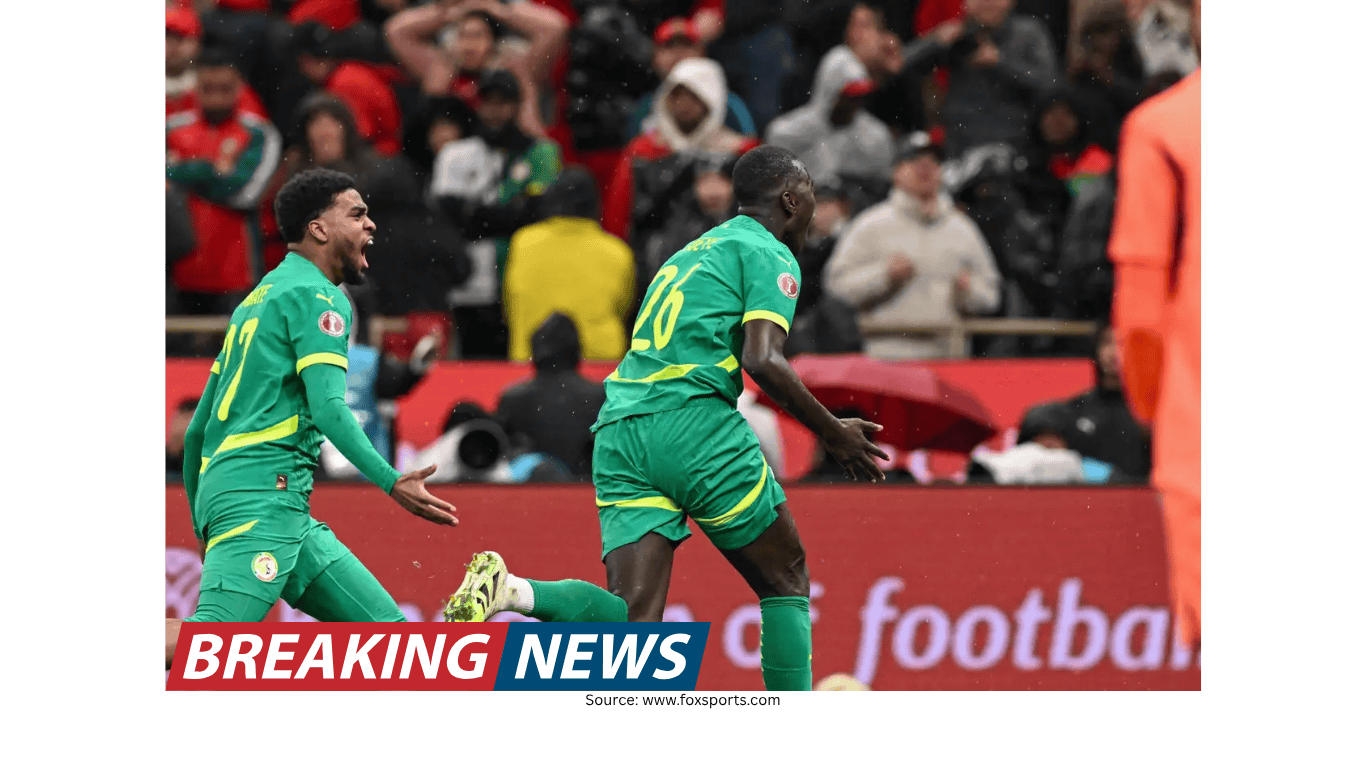
A trophy parade with a message
Senegal’s national team turned a pre-match moment in Paris into a pointed statement about identity, pride, and a title now locked in dispute. In front of a sold-out Stade de France, the Lions of Teranga presented the Africa Cup of Nations trophy to their supporters ahead of a friendly against Peru on Saturday, treating the silverware not as a contested artefact but as a symbol of what they believe they earned on the pitch.
The scene was carefully staged and unmistakably deliberate. Captain Kalidou Koulibaly led the squad and staff in a lap of honour, while goalkeeper Edouard Mendy held the trophy aloft to loud cheers. Players and staff then posed for a formal group photo with the silverware. In a sport where gestures can carry as much weight as words, the message was clear: Senegal are not behaving like a team that accepts it has been stripped of a continental crown.
This public celebration came in the shadow of a recent ruling that revised the official outcome of the tournament’s final. Senegal’s display in Paris was, in effect, a rebuttal delivered without a press conference—an insistence that their internal sense of legitimacy has not shifted, even if the record books have.
CAF ruling reshapes the official record
The backdrop to Senegal’s Paris parade is a decision by the Confederation of African Football (CAF) that has sent shockwaves across the continent. Ten days earlier, CAF revised the tournament’s history, declaring that Senegal had forfeited the final match and awarding the title to Morocco.
Senegal had initially been credited with a 1-0 victory on the field in January. But the administrative ruling has placed that result under a cloud, transforming what was celebrated as a defining triumph into a case study in how regulatory decisions can override events on the pitch.
CAF’s Appeal Board set out its position in direct terms, citing the competition’s regulations. In its statement, the board said: “The CAF Appeal Board decided today that in application of Article 84 of the Regulations of the CAF Africa Cup of Nations (AFCON), the Senegal National Team is declared to have forfeited the Final Match of the TotalEnergies CAF Africa Cup of Nations (AFCON) Morocco 2025 (\"the Match\"), with the result of the Match being recorded as 3–0 in favour of the Fédération Royale Marocaine de Football (FRMF).”
That wording leaves little room for interpretation about the administrative outcome. Yet Senegal’s actions at Stade de France show that, in their own narrative, the matter is far from settled.
What happened in the final: protest, delay, and a decisive finish
The controversy traces back to a dramatic final in Rabat, where the match’s emotional temperature rose sharply late in the game. Senegal’s coach, Pape Thiaw, ordered his players to return to the dressing room in protest after the referee awarded Morocco a last-minute penalty following a VAR review.
The foul in question involved Brahim Diaz, and the decision triggered immediate anger from Senegal’s players. The protest escalated into a stoppage that lasted 17 minutes, with the Lions of Teranga refusing to continue until they were persuaded to return.
According to the account of events, Sadio Mane played a key role in convincing his teammates to go back onto the field, allowing the match to resume. But while the game continued, the incident appears to have become central to the regulators’ later interpretation of what occurred and what sanctions should follow.
On the pitch, the decisive moments still arrived. Diaz missed the penalty, and Senegal went on to score an extra-time winner through Pape Gueye. In purely sporting terms, the sequence suggested a team that had survived a major scare and then found the winning goal. In administrative terms, however, the earlier protest has been treated as a breach serious enough to alter the official result.
Senegal’s response: “administrative robbery” and an appeal to CAS
Senegal’s Football Federation (FSF) has not accepted the ruling quietly. It has appealed to the Court of Arbitration for Sport (CAS), seeking to overturn CAF’s decision and restore Senegal’s status as champions. The federation has described the ruling as an “administrative robbery,” a phrase that captures both the anger behind the appeal and the belief that the title was taken away through process rather than play.
FSF President Abdoulaye Fall is pursuing reinstatement through the legal route, though the federation acknowledges the process may take months. That timeline means the dispute could linger, with Senegal’s players and supporters living with uncertainty about how the tournament will ultimately be remembered and recorded.
Even before any final legal outcome, Senegal have taken a visible step to reinforce their stance. The federation has already added a second star to the national team’s jerseys to mark what it considers a legitimate, if contested, championship. In football culture, stars are not just decoration; they are a shorthand for achievement, stitched into the identity of a national side. Adding one in the middle of a dispute is a strong signal that Senegal are treating their claim as real and enduring.
Paris friendly becomes a stage for solidarity
Friendly matches are typically framed as preparation, experimentation, or a chance to reconnect with supporters. In this case, the friendly against Peru became something more: a platform for solidarity and a public reaffirmation of Senegal’s position in the dispute.
The setting amplified the message. A sold-out Stade de France provided a major arena and a large audience, turning a symbolic act into a mass spectacle. The lap of honour led by Koulibaly and the trophy held high by Mendy were not incidental celebrations; they were the centrepiece of Senegal’s pre-match narrative.
The decision to take a formal group photo with the trophy further underlined the point. Teams pose with trophies when they want a moment fixed in memory—an image that can be shared, archived, and revisited. In the context of an administrative ruling that seeks to rewrite the official story, Senegal’s photo functions as a counter-record, a visual insistence that their version of events will not be erased easily.
How the dispute is being framed
At the heart of the conflict is a clash between two kinds of authority: the authority of the match result as it unfolded and the authority of competition regulations as interpreted by governing bodies. Senegal’s players appear to be aligning themselves with the former, while CAF’s ruling asserts the latter.
CAF’s position, as stated, relies on the application of Article 84 of the AFCON regulations and the conclusion that Senegal forfeited the final. The consequence is severe: a 3–0 result recorded in favour of Morocco. Senegal’s position, expressed through their federation’s language and the team’s public gestures, is that the title was won and should remain theirs.
Senegal’s use of the phrase “administrative robbery” frames the issue as a matter of justice and legitimacy, suggesting that what was achieved on the field has been taken away through institutional power. CAF’s language, by contrast, is procedural and regulatory, presenting the decision as an application of rules rather than a discretionary rewriting of history.
Key points in the timeline
- January: Senegal are initially credited with a 1-0 win in the final, decided by an extra-time goal from Pape Gueye after Brahim Diaz missed a late penalty.
- Late in the final: Coach Pape Thiaw orders players to return to the dressing room in protest after a VAR-reviewed penalty is awarded to Morocco, leading to a 17-minute delay before play resumes.
- Ten days before the Paris friendly: CAF revises the official outcome, declaring Senegal to have forfeited and recording the result as 3–0 for Morocco.
- After the ruling: FSF appeals to CAS, calling the decision an “administrative robbery,” and adds a second star to the national team’s jerseys.
- Saturday in Paris: Senegal parade the trophy at Stade de France ahead of a friendly against Peru, led by Kalidou Koulibaly with Edouard Mendy holding the trophy.
What comes next
The next chapter will be written in legal proceedings rather than on the pitch. Senegal’s appeal to CAS is designed to challenge CAF’s ruling and restore their title. The federation expects the process could take months, meaning the dispute will likely remain unresolved in the near term.
Until then, Senegal’s approach appears to be one of steadfast public certainty. By parading the trophy, posing for photographs, and wearing a second star, the team and federation are acting as though their championship status is intact. The governing body’s decision, meanwhile, stands as the official position unless and until it is overturned.
For supporters, the Paris scenes offered a moment of unity and celebration despite the uncertainty. For the wider football world, they served as a reminder that the meaning of a title can extend beyond a final scoreline—especially when administrative decisions collide with what happened in the decisive moments of a final.