
Mohamed Salah’s Liverpool legacy: goals, trophies and an era-defining Premier League figure
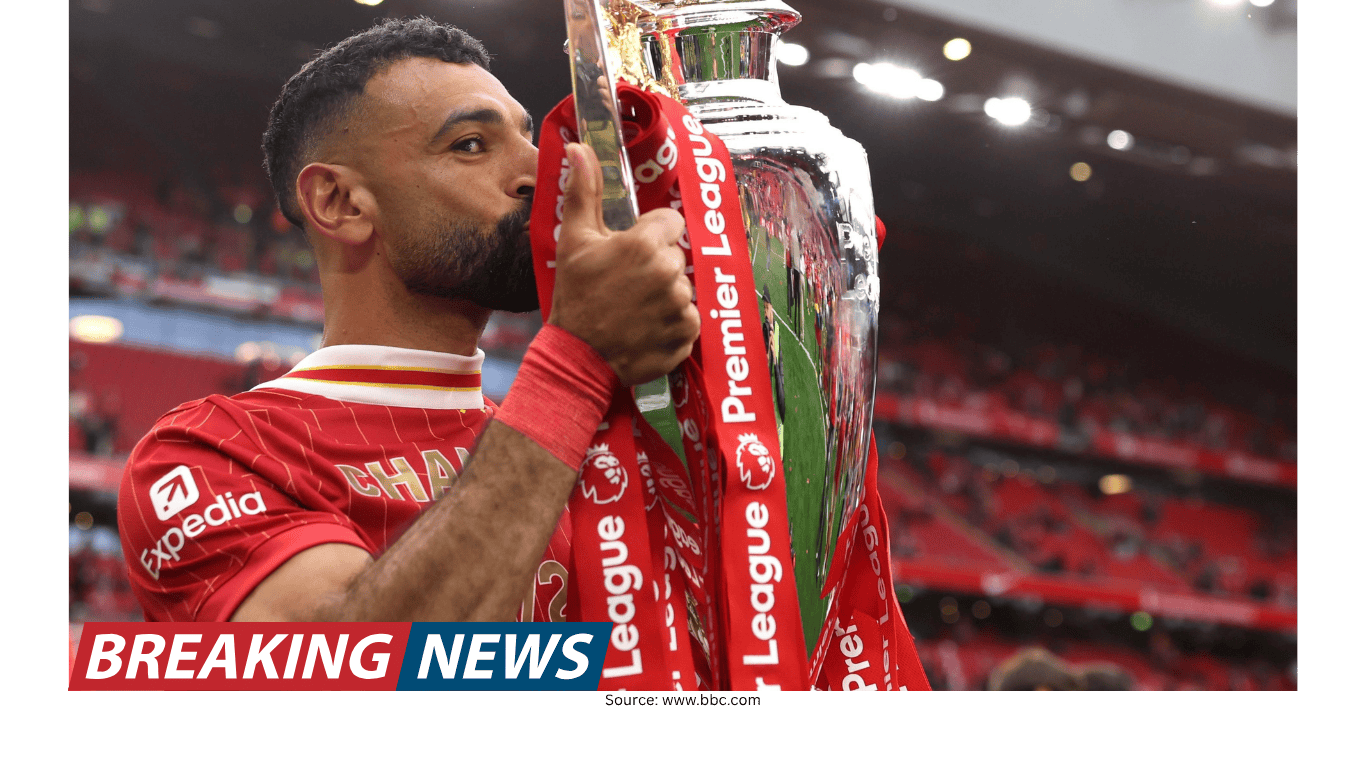
Mohamed Salah is preparing to leave Liverpool this summer with a body of work that positions him among the club’s all-time greats and as a landmark figure in Premier League history. The evidence is written clearly in his goals, assists and honours, but his standing at Anfield has never been purely statistical. For a generation of supporters, Salah became an emblem of an era: a forward whose finishing, durability and decisive moments helped shape Liverpool’s modern identity.
Arriving from AS Roma on 23 June 2017 for a fee of £34m, Salah’s transfer now reads like one of the defining pieces of business of the period. At the time, he was already a high-level attacker, but the scale and consistency of what followed at Liverpool elevated him into a different category. Over the years, he became a player whose presence was felt not only in match-winning bursts, but in the broader rhythm of Liverpool’s seasons, where goals and key contributions were expected rather than hoped for.
From a Chelsea false start to an Anfield icon
Salah’s route to Liverpool included a Premier League chapter that did not initially suggest what he would later become. Like Kevin de Bruyne, another eventual Premier League great, Salah had previously been at Chelsea and failed to make a sustained impact. His Chelsea record stood at two goals in 19 appearances, with only 10 starts. Earlier still, when leaving Swiss side Basel in January 2014, he had turned down Liverpool to join Chelsea instead.
Before he eventually signed for Liverpool, his only Anfield memory was as a starter for Jose Mourinho’s Chelsea in a 2-0 win in April 2014—an infamous match in Liverpool’s season due to Steven Gerrard’s slip and the result’s significance in the title race. Years later, Salah returned to Merseyside not as a peripheral figure, but as the centrepiece of a team built to attack at speed and intensity.
His development had been rapid after Chelsea. A loan spell at Fiorentina was followed by a superb period at AS Roma, and by the time Liverpool moved for him, he arrived as what was described as the “finished article.” Even so, it is difficult to imagine that anyone—Jurgen Klopp included—could have forecast just how prolific and durable Salah would become in a Liverpool shirt.
A first goal that hinted at what was coming
Salah’s Liverpool story began in a way that almost felt understated compared to what followed: his first goal was a scruffy, bundled effort on the goal line in a 3-3 draw at Watford on the opening day of his first season. But from that point, the pattern was set. He scored and kept scoring, turning reliability into a trademark.
His first season set a marker that few players in the modern game can match. Across 52 appearances, he scored 44 goals and added 14 assists. The campaign ended painfully in the Champions League final against Real Madrid in Kiev, when he injured his shoulder after a challenge by defender Sergio Ramos and lasted only 31 minutes of a 3-1 defeat. Yet the setback did not define him. It became part of the narrative of resilience that would underpin his Liverpool career.
Just a year later, he found Champions League final redemption. Liverpool beat Tottenham 2-0 in Madrid, and Salah scored an early penalty. It was a concise moment, but also a symbolic one: the forward who had been forced off injured in Kiev was now delivering in the biggest match of the club season.
The numbers that place Salah among Liverpool’s greatest
As he prepares to depart, Salah’s Liverpool record stands at 255 goals in 435 games. That places him third on the club’s all-time list of scorers, behind Ian Rush and Roger Hunt. In an institution that measures greatness in eras and legends, being placed in that company is an achievement in itself.
His Premier League output is equally striking. Salah has made 310 league appearances for Liverpool, scoring 189 goals and registering 92 assists. That equates to 281 goal contributions in the Premier League for a single club—described as the biggest for one club in the competition’s history, five more than Wayne Rooney’s total for Manchester United.
Great forwards are often associated with a ruthless, selfish streak, and Salah had that edge. But the assist totals underline something else: he was not simply a finisher feeding off others, but a consistent team contributor. Liverpool’s attacking patterns frequently ran through him, and his ability to both score and create became a defining feature of the side.
- Goals for Liverpool: 255 in 435 games
- Premier League for Liverpool: 310 appearances, 189 goals, 92 assists
- Premier League goal contributions for one club: 281 (189 goals + 92 assists)
- All-time Liverpool scorers list position: third (behind Ian Rush and Roger Hunt)
Trophies and the era of major honours
Salah’s Liverpool career is inseparable from a period in which the club added major silverware to its honours board. During his time at Anfield, Liverpool won the Champions League, two Premier League titles, the FA Cup, the EFL Cup, the Uefa Super Cup and the Fifa Club World Cup. These trophies provide context for his personal output: his goals were not amassed in isolation, but in seasons where Liverpool were competing at the highest level and frequently winning.
One of the defining aspects of Salah’s time at Liverpool was how his individual excellence aligned with collective success. He was not merely a star in a rebuilding project; he was a central figure in a team that consistently targeted the biggest prizes.
The trident that defined a peak Liverpool attack
At the height of Liverpool’s attacking power, Salah formed one part of an elite front three alongside Sadio Mane and Roberto Firmino. The roles were clear and complementary. Salah attacked from the right, Mane patrolled the left, and Firmino operated as a striker who could also drop deep, connecting play and helping the system function as a whole.
It was described as a marriage of pressing, power, skill, pace and threat, and it is difficult to separate Salah’s peak output from the structure around him. In that unit, Liverpool could overwhelm opponents in different ways: quick transitions, coordinated pressure, and the ability to turn half-chances into goals. While Salah and Mane were not always compatible as personalities, on the pitch they were said to be perfectly in tune, aided by Firmino’s subtle influence.
Consistency, fitness, and the expectation of goals
Beyond the highlights, Salah’s consistency and fitness were remarkable. In a sport where elite forwards can be streaky, his baseline level remained extraordinarily high. His lowest goals total in a full season before the current campaign came in 2019-20, when he “only” scored 23 as Liverpool won the Premier League title for the first time in 30 years. The use of “only” is telling: for Salah, even a season that might represent a career-best for many players was considered a dip from his own standards.
His win rates also reflect the broader success of Liverpool during his tenure. From 310 Premier League appearances, his win rate was 63.9%, while across his total of 435 games it was 62.7%. Those figures are not just about individual influence, but they speak to the environment in which he operated—years in which Liverpool were regularly winning and competing at the top end of the game.
From Klopp’s intensity to Slot’s strategy: Salah as the constant
As Liverpool evolved, Salah remained central. When the era of key figures such as Mane and Firmino came to a close—along with other influential names including captain Jordan Henderson and Fabinho—Klopp rebuilt and labelled the new version “Liverpool 2.0.” In that transition, one thing did not change: Salah continued to be the match-winner.
There were fraught moments. Salah had tense episodes with Klopp and later with Klopp’s successor, Arne Slot. One notable incident came in April 2024, when West Ham United scored as Salah waited to come on as a substitute in a 2-2 draw at London Stadium, prompting an angry touchline exchange. Yet the broader relationship between Klopp’s all-out attacking approach and Salah’s strengths was clear. They were, in football terms, made for each other: the system created space and volume, and Salah converted that into decisive output.
After Klopp left, Salah produced a season that ranked alongside his greatest, described as a personal mission to bring the Premier League back to Anfield and secure the club’s 20th title to equal Manchester United’s. In that campaign, he delivered again. He scored 34 goals in 50 starts in all competitions, and Liverpool won the title with ease. The season also helped ensure the transition from Klopp—an iconic, fiercely animated presence—to the more measured, strategic Slot was seamless in the Dutch coach’s first season.
A contract extension, then a difficult final season
In April 2025, Liverpool supporters rejoiced when Salah signed a new two-year contract. At that moment, the immediate future appeared secure. However, the current season brought a surprising decline in form, and it unfolded against a backdrop of tragedy at the club.
Liverpool and its supporters were left heartbroken by the death of team-mate Diogo Jota, who was killed in a car crash in July. Much of the club’s grief remained private, and the full toll on individuals was unknown. But Salah’s emotions were visible in the opening Premier League game of the season against Bournemouth at Anfield.
After scoring Liverpool’s final goal in a 4-2 win, Salah used Jota’s trademark goal celebration. He was then moved to tears in front of the Kop as he applauded supporters after the final whistle while they sang Jota’s song. It was a moment that revealed the human side of elite sport: even for a player long defined by output and composure, the weight of events could not always be hidden.
Benchings, a public interview, and a partial reconciliation
The decline in Salah’s form led to him being dropped to the bench for three successive games in six days. That sequence set the stage for a dramatic public moment after he watched a 3-3 draw against Leeds United on 6 December. In an interview—rare for him, and usually carefully calculated—Salah claimed he had been “thrown under the bus” by Liverpool and said his relationship with Slot had broken down.
While the comments brought the heaviest criticism of his time at Liverpool, matters were resolved enough for him to return quickly to action. The following weekend, he made an early substitute appearance against Brighton at Anfield. Liverpool won 2-0, and Salah acknowledged the supporters by tapping his heart in front of the Kop. Soon after, he departed for the Africa Cup Of Nations with Egypt.
In the months that followed, any tarnishing of his reputation was viewed as temporary. He was rehabilitated in the sense that the broader judgement of his Liverpool career did not hinge on a difficult stretch, even if he was no longer the force he once was.
How Salah will be remembered at Liverpool
When assessing Salah’s Liverpool career, the conclusion is hard to avoid: he has been one of the greatest players ever to wear the club’s red shirt. The goal totals place him among historic company, the assist numbers show a wider influence than pure finishing, and the trophies confirm that his best years were tied to Liverpool’s return to the summit of English and European football.
He also leaves behind something less measurable but equally real: a catalogue of memories for supporters across Anfield and a global fanbase. From the earliest days—when his coach at Basel, Murat Yakin, hinted at his potential after a Europa League performance by saying, “If Mohamed could score as well, he would not be here any more”—to the years in which he became known as the “Egyptian King” on the Kop, Salah’s rise has been defined by progression, resilience and sustained excellence.
As Liverpool look beyond his departure, the scale of the task becomes clear. Replacing goals is difficult enough; replacing a player who delivered them season after season, across different versions of the team and through managerial change, is harder still. Whatever the next chapter brings, Salah’s Liverpool story stands as one of the defining careers of the Premier League era.