
Tyson Fury returns with unanimous decision win over Arslanbek Makhmudov as Anthony Joshua rivalry heats up
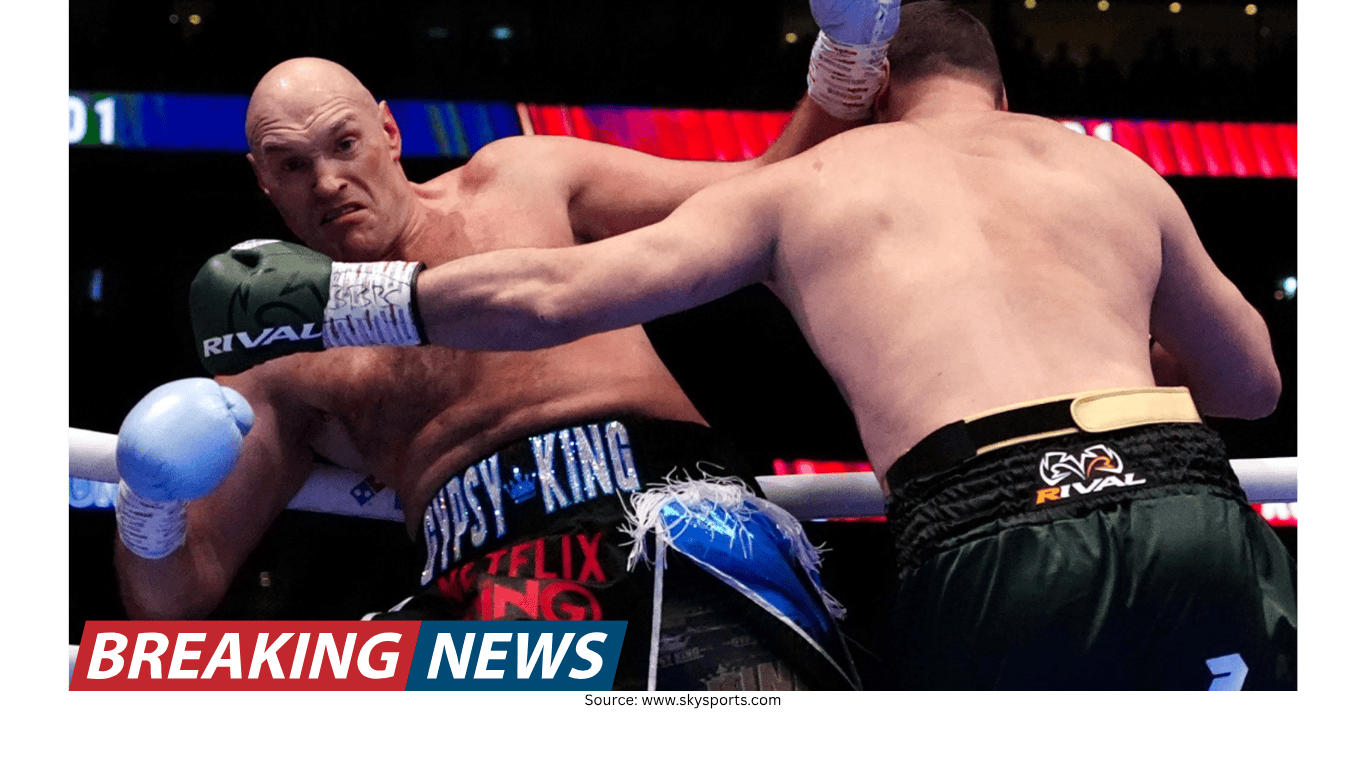
Fury’s comeback night in London
Tyson Fury returned to the ring after a 16-month retirement and marked the occasion with a unanimous decision victory over Arslanbek Makhmudov at Tottenham Hotspur Stadium in London. The win was wide on the judges’ cards and, just as significantly, it unfolded with Anthony Joshua watching closely from ringside.
The event carried the feel of a major moment for British boxing, not only because of Fury’s first contest in a British ring since 2022, but also because of what the night appeared to set in motion. Earlier in the evening, Saudi financier Turki Alalshikh, who was staging the card, teased that “the biggest fight in the history of England” between Fury and Joshua was close to being made. With Fury back in action and Joshua present, the storyline was impossible to ignore.
Fury is 37 years old and, as he has acknowledged through his actions, he knows his time in the sport cannot last forever. Yet the scale of the reception inside the stadium offered a clear explanation for why he chose to return. The comeback, the opponent, the venue, and the rival in attendance combined into a single, high-pressure night—one that ended with Fury’s hand raised and his next target named.
A retirement, a return, and a carefully chosen opponent
Fury had stepped away from boxing for 16 months after two losses to reigning world champion Oleksandr Usyk. His decision to come back brought immediate questions: how much sharpness would remain, how would he handle the pace, and what would he look like against a heavyweight known for early danger?
For his return bout, Fury selected Makhmudov, described as strong but predictable. That choice shaped the tactical pattern of the contest. Makhmudov’s reputation for being dangerous early meant Fury would need to settle quickly, read the rushes, and impose control without taking unnecessary risks. The aim was not only to win on points, but to show he could still perform at a level that keeps the biggest opportunities alive later in the year.
From the outset, the fight had two tracks running at once: the action in the ring and the looming possibility of Fury vs Joshua. Fury was fighting to prolong his career and to position himself for what was described as potentially the richest prize of his entire career later this year. That context hung over every round.
An emotional entrance and a stadium atmosphere
Before the first bell, Fury made an entrance that blended tribute and theatre. He paid an emotional homage to his great friend Ricky Hatton, the British boxing legend who died last year. Fury used Hatton’s signature “Blue Moon” music and wore shorts in Hatton’s style, turning the walkout into a personal statement as well as a spectacle.
The sombre tone did not last long. The stadium erupted into cheers as fireworks and flames burst around Fury while he stood on a raised platform in front of the crowd. He danced and grinned, feeding off the energy. The scene underlined a key reality of heavyweight boxing at this level: the event is as much about presence and occasion as it is about the technical details of a 12-round contest.
With Joshua waiting in the wings, the atmosphere became even more charged. The crowd response, the production, and the rivalry in the background created a sense that this was not simply a comeback fight—it was a public re-entry into the biggest conversations in the sport.
Early danger: Makhmudov charges from the opening bell
Makhmudov began exactly as expected, charging into Fury from the opening bell. The early moments were frantic and physical, with Makhmudov’s forward momentum testing Fury’s movement and composure. Fury moved back in straight lines at times, and that allowed Makhmudov to barrel him into the ropes.
The Russian swept down his right hand, threatening early. The attacks were described as clumsy rushes, but they served a purpose: they forced Fury to take stock and establish the range and rhythm that would eventually define the fight. For a returning fighter, those first minutes can be uncomfortable even when they are manageable, and Fury had to show he could absorb the chaos and then calm it.
It was also a reminder of why Makhmudov was selected for the role he played on this night. He was strong, aggressive, and willing to take risks early—enough to create tension—while still offering patterns Fury could read and counter once he settled into the contest.
Fury finds his timing and begins to take control
In the second round, Makhmudov wandered out of position after a wild attack and Fury responded with sharp punches that triggered a huge roar from the crowd. Fury thumped in another shot to draw another cheer, and Makhmudov was left shrugging his head and neck at the end of the session as if trying to shake off the impact.
By the third, Fury began to look more like a fighter who had found his measure. He lashed down a one-two and, behind a fierce jab, moved onto the front foot. He landed a right hook as Makhmudov hurled a punch of his own, and for a moment Makhmudov’s legs appeared to buckle. Fury smiled as he leaned on him, an expression that suggested he had gained confidence in the exchanges.
The fourth round brought another telling sequence. Makhmudov caught Fury with his left, but when he lunged forward he again stranded himself on the ropes. Fury took advantage, lining up a crunching right cross that slammed into the side of Makhmudov’s head. The pattern was becoming clear: Makhmudov would surge, sometimes landing, but Fury was increasingly able to punish the over-commitment.
As they moved into the second half of the contest, they touched gloves, and the bout settled into a more controlled rhythm. Fury had found the distance and the pace he wanted, and the fight began to look like a disciplined points performance rather than a risky comeback drama.
Jabs, clinches, and inside work in the middle rounds
With the fight stabilised, Makhmudov continued to trundle forward while Fury marked him out with reliable left jabs. The jab became a key tool: it disrupted Makhmudov’s entries, scored repeatedly, and helped Fury dictate where the exchanges took place.
There were also clinches, with the two heavyweights slamming together at times. Fury was described as effective on the inside, using close-range work to blunt Makhmudov’s pressure and to score with compact shots. At one point he bounced Makhmudov’s jaw aside with a tight left hook, another reminder that Fury’s control was not only about movement but also about physicality.
In the eighth round, Fury picked out a long lead hook and pressed his opponent back, but he did not rush. That restraint mattered. Rather than chasing a finish, Fury appeared focused on maintaining dominance, limiting openings, and building a commanding score on the cards.
A late push, a slip, and a strong finish without a stoppage
The later rounds provided moments of intensity even as the overall direction remained consistent. At the end of the 10th, the fighters traded fiercely and Makhmudov wearily lost his footing, slipping down to the canvas. Just before the bell, Fury shook him up with a right hand followed by a left hook to the chin.
In the 11th, Fury briefly switched southpaw. From that stance he flapped his jab into Makhmudov, then attacked the body before bringing an uppercut through to the head. He turned Makhmudov into a corner but could not find a finishing touch. A hard left hook from the southpaw stance prompted another gasp from the crowd, yet Makhmudov lasted the course.
When the final bell sounded, the scorecards reflected a one-sided fight: 120-108 on two cards and 119-109 on the third. Fury had secured a wide unanimous decision, close to a shutout, in a performance that combined early caution with increasing command.
The post-fight focus: Fury calls out Joshua
No sooner had the decision been announced than Fury turned the moment into a direct challenge. Addressing the stadium, he declared: “Next, I want to give you the fight you’ve all been waiting for.” He then bellowed down to his rival: “I want you, AJ, Anthony Joshua. Let’s give the fight fans what they want - the Battle of Britain. I challenge you Anthony Joshua to fight me the Gypsy King next.”
Joshua responded in kind, dismissing Fury’s callout and insisting he would not be dictated to. “Tyson, you are a clout-chaser,” Joshua said. “I’ve never had no problem getting in a ring with you, I punched you up as kids [when they sparred]. Watching you tonight I’ll punch you up again.”
Joshua added: “With all due respect, tonight is your night. You won’t tell me what to do. I’ve been chasing you the last 10 years, when you’re ready you come and see me and tell me your terms and conditions.” He finished with a final line aimed at establishing leverage: “I’m the boss, you work for me. I’m the landlord. You work for me.”
The exchange captured the essence of the rivalry: both men framing themselves as the one in control, both confident enough to speak in absolutes, and both aware of what a fight between them would mean in England.
What the night showed—and what it set up
Fury’s comeback victory achieved several things at once. It ended a lengthy absence, delivered a decisive result, and offered a clear narrative arc from early threat to sustained control. The tribute-laden entrance and the stadium spectacle reinforced his ability to draw attention on a major stage, while the wide scorecards suggested he was able to manage the demands of a 12-round heavyweight contest.
Just as importantly, the night kept the conversation centred on a potential mega-fight with Joshua later this year. With Joshua present, with promotional hints already floating earlier in the evening, and with both fighters trading words after the final decision, the event functioned as more than a single bout. It was a public step toward a matchup that has been discussed for years and was again presented as a historic possibility.
For now, the confirmed outcome is straightforward: Fury returned and beat Makhmudov by unanimous decision at Tottenham Hotspur Stadium. Everything else—timelines, terms, and whether the “Battle of Britain” is finalised—remains a matter of what happens next, but the message from the ring was unmistakable.
Key moments at a glance
- Tyson Fury returned after a 16-month retirement and won by wide unanimous decision over Arslanbek Makhmudov in London.
- Anthony Joshua watched from ringside, adding weight to talk of a major fight later in the year.
- Fury paid tribute to Ricky Hatton during his entrance, using “Blue Moon” and Hatton-style shorts.
- Makhmudov started aggressively, but Fury gradually established control with jabs, counters, and inside work.
- Scorecards read 120-108, 120-108, and 119-109.
- Fury called out Joshua immediately after the decision; Joshua replied with a pointed response and insisted Fury come with terms when ready.